
Flexible food packaging remains on a growth path. According to the latest study “Flexible Food Packaging in Europe” by SCHÖNWALD CONSULTING, consumption in 2025 was over 4.2 million tonnes. At the same time, the market, materials, and regulatory requirements are changing significantly.
Key Takeaways
- Over 4.2 million tonnes of flexible food packaging were consumed in Europe in 2025 – with growth projected through 2030.
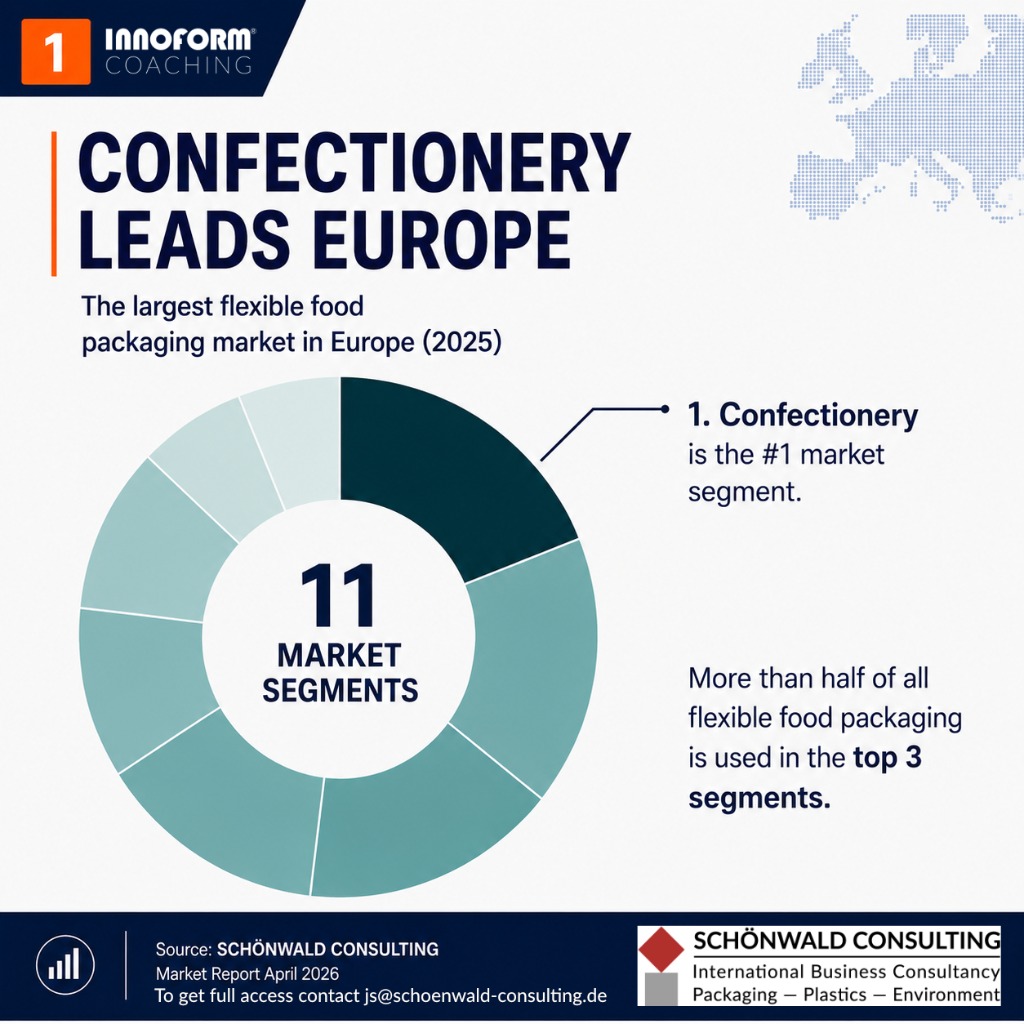
- 11 market segments; Confectionery, Convenience Food & Fresh Products, and Dry Products together account for over 50% of the market.
- Convenience Food & Fresh Products is the fastest-growing segment (to-go consumption, urbanization, e-commerce).
- The PPWR is the key regulatory driver for materials, design, and recyclability.
- Source: Study “Flexible Food Packaging in Europe” by SCHÖNWALD CONSULTING (140 pages, forecasts up to 2030).
Market Overview 2025: Growth and a Clear Structure
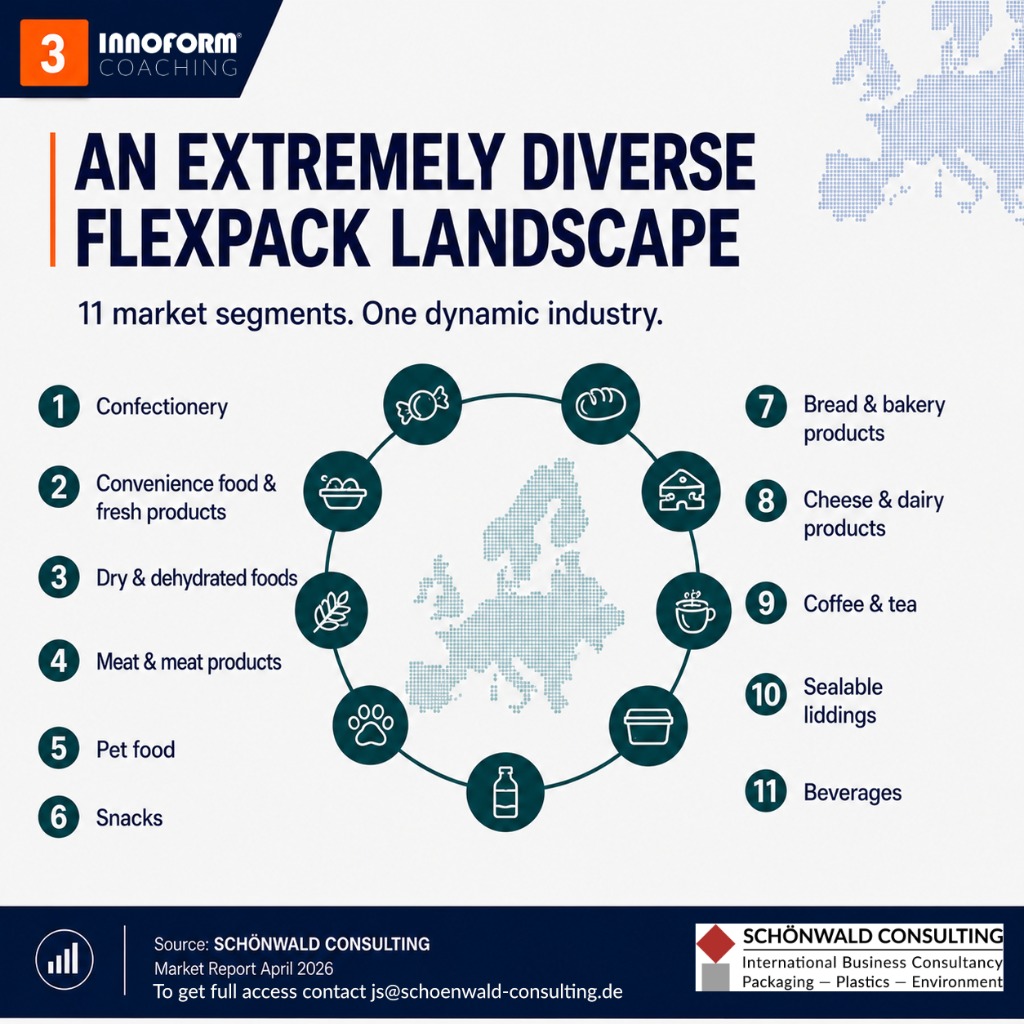
Today, the market has a clear structure. In total, there are 11 relevant market segments. The key facts:
- Over 4.2 million tonnes consumed in Europe
- 11 market segments
- More than 50% is accounted for by the top 3 segments
- Stable demand with growth projected until 2030
The Most Important Market Segments
The study distinguishes between the following application areas:
- Confectionery (largest segment)
- Convenience Food & Fresh Products (No. 2, fast-growing)
- Dry Products
- Meat and Meat Products
- Pet Food
- Snacks
- Bakery Products
- Dairy Products
- Coffee & Tea
- Sealable Lidding Films
- Beverages
Important: The three largest segments together account for more than half of the market.
Convenience Food Shows Particularly Strong Growth
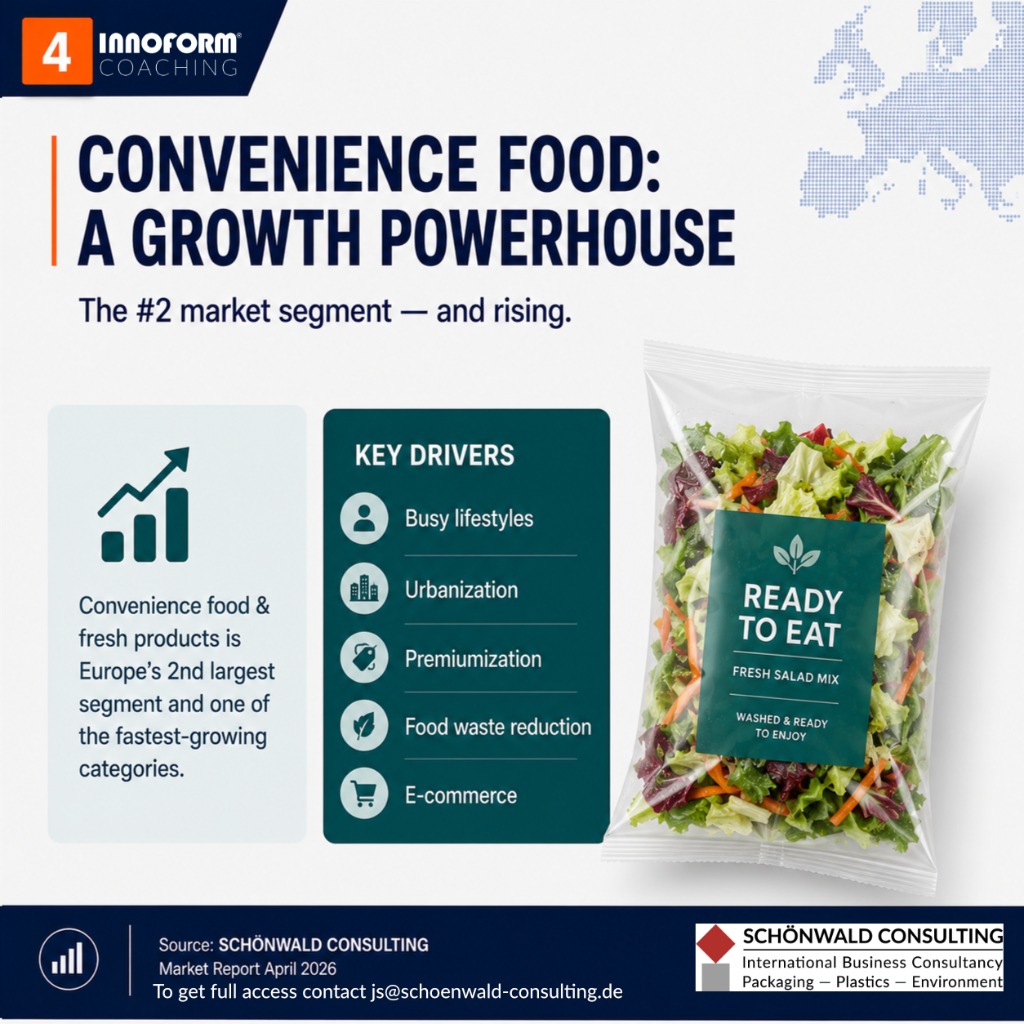
The “Convenience Food & Fresh Products” segment shows the strongest growth. The reasons are clear:
- More “to-go” consumption
- Urbanization
- Higher convenience requirements
- Reduction of food waste
- Growth in e-commerce
Flexible packaging supports these trends through functionality and efficiency.
Why Flexible Packaging Continues to Win
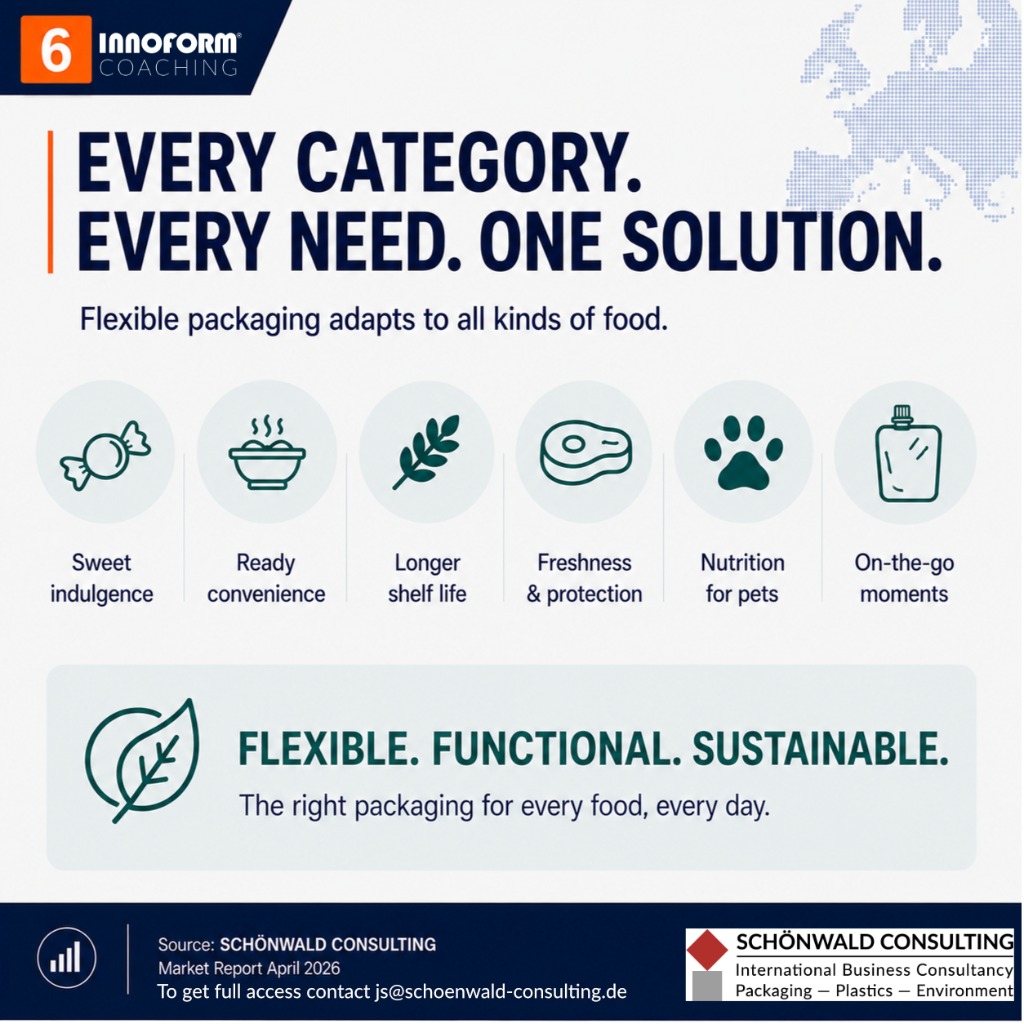
Flexible packaging meets many requirements simultaneously:
- Protection of sensitive food products
- Shelf-life extension
- Light weight
- Excellent processability
- Flexible adaptation to products
This makes them the most economical solution for many applications.
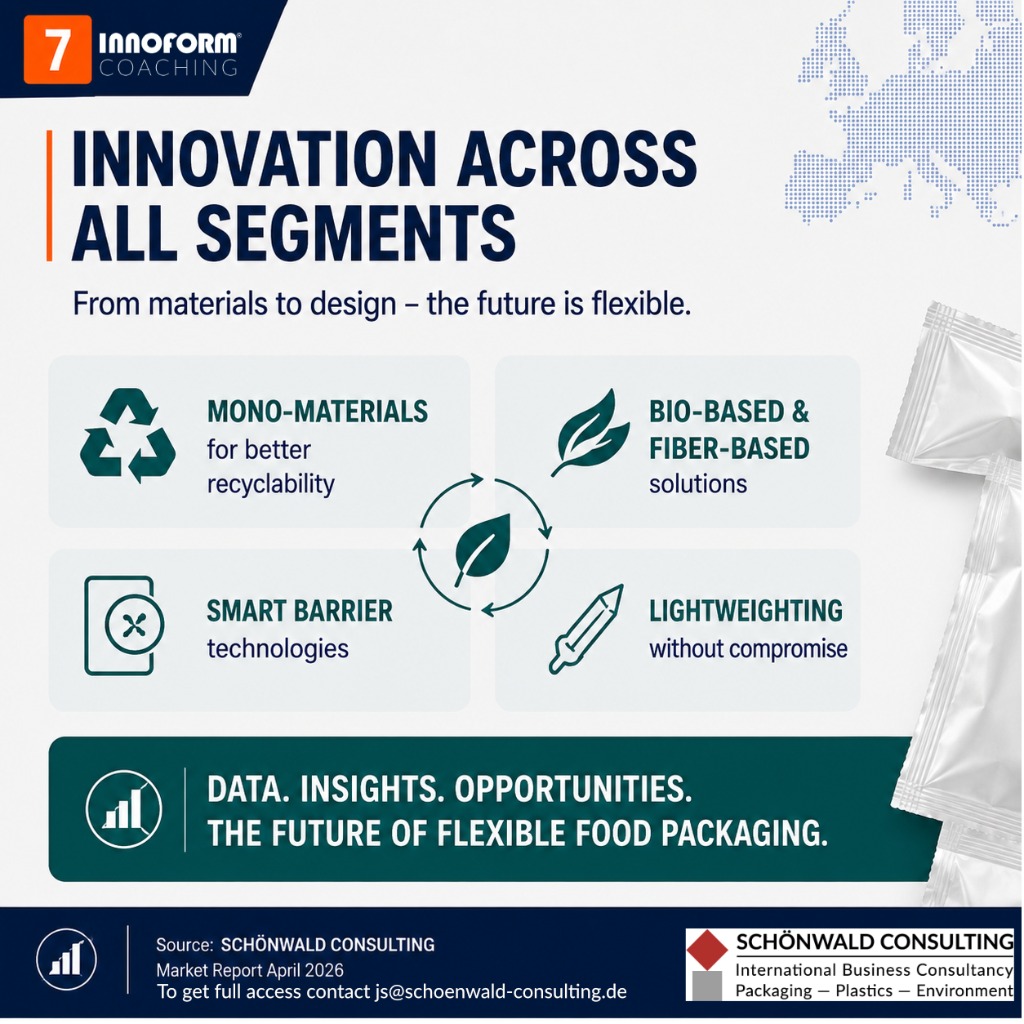
Key Innovation Trends
The study highlights four central development directions:
Mono-materials
- Better recyclability
- Replacement of complex laminates
Bio-based and fiber-based solutions
- Complementing conventional plastics
- Increasing demand
Barrier technologies
- Targeted protection with reduced material usage
Lightweighting
- Less material
- Lower costs and carbon footprint
PPWR: The Most Important Driver for Change
A central component of the study is the EU PPWR regulation. The key impacts:
- New requirements for recyclability
- Targets for material usage
- Clear deadlines and transition periods
- Influence on design and material selection
Companies must act early to remain compliant.
Conclusion for Flexpack Experts
The market continues to grow. At the same time, requirements are increasing. Key areas of action:
- Focus on high-growth segments
- Switching to recyclable materials
- Evaluating mono-material solutions
- Optimizing barrier properties
- Considering PPWR during development
Without sound market data, decisions are becoming increasingly risky.
Benefit from the latest study on flexible packaging in Europe.
Frequently Asked Questions About the Study
How large is the market for flexible food packaging in Europe?
In 2025, the market was over 4.2 million tonnes and continues to grow.
Which segments are the most important?
The most important segments are Confectionery, Convenience Food & Fresh Products, and Dry Products. These three account for more than 50% of the market.
Why is convenience packaging growing so rapidly?
Drivers include changing lifestyles, increased “to-go” consumption, urbanization, and requirements for freshness and shelf life.
Which materials are in focus?
Mono-materials (for recycling), bio-based plastics, fiber-based solutions, and optimized high barriers.
What role does the PPWR play?
The PPWR is the most important regulatory driver. It influences material selection, packaging design, recyclability, and future market access.
What does this mean for companies?
Companies must adapt their packaging, invest in new materials, and consider regulatory requirements at an early stage.
Further Information
The study includes:
- 140 pages
- 88 tables and charts
- Detailed market data
- Forecasts up to 2030
- Full PPWR classification
Further information can be found directly on the SCHÖNWALD CONSULTING website:
Flexible Food Packaging in Europe 2026
