How the flexpack industry meets regulatory requirements
Under the main theme “Flexpack 2030,” the 23rd Inno-Meeting on February 24 and 25, 2026 in Osnabrück provided strong impetus for the future of flexible packaging. In the midst of a profound transformation process in the industry, the industry meeting presented solutions and trendsetting innovations that will shape the further development of packaging within the framework of the PPWR and other regulatory requirements until 2030 and beyond.
Stricter food contact regulations, ambitious PPWR targets, and the gradual phase-out of PFAS are increasing the pressure on flexible packaging manufacturers to transform. For them, it is about fundamental structural changes. High-performance, legally compliant, and recyclable packaging solutions are becoming a key task for the industry.
The 23rd Inno-Meeting in Osnabrück focused on these challenges. Solutions for digitally accelerated product development, innovative barrier materials, and closed-loop recycling solutions were presented. Host and moderator Karsten Schröder guided participants through a future-oriented program with surprising insights and intensive discussions.
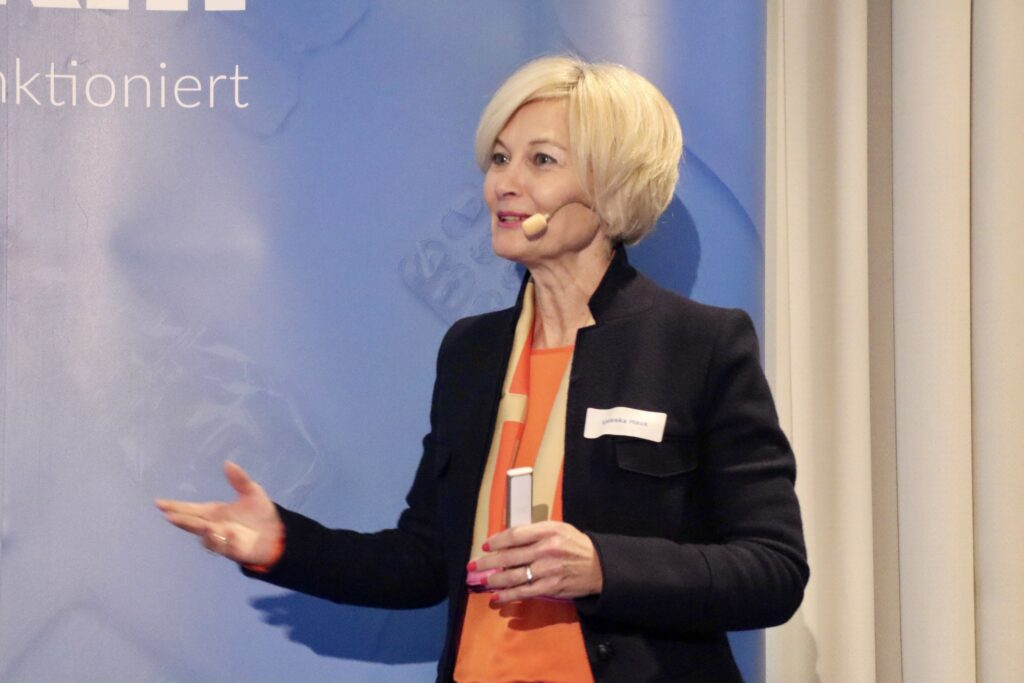
Valeska Haux, an expert in strategy and marketing, defined brands as a strategic lever for differentiation, trust, and stable margins. The market for flexible packaging is technology- and price-driven—and it is undergoing radical change. Successful brands are focusing on clear specialization, technical credibility, solid sustainability expertise, visible expertise, and consistent communication.
In view of regulation, sustainability pressures, digitalization, and new competitors, brands must be actively developed and anchored within the company as a strategy. Sustainability is a MUST. Genuine differentiation comes from substance, consistency, focus, and thought leadership—especially in an increasingly fragmented media landscape.
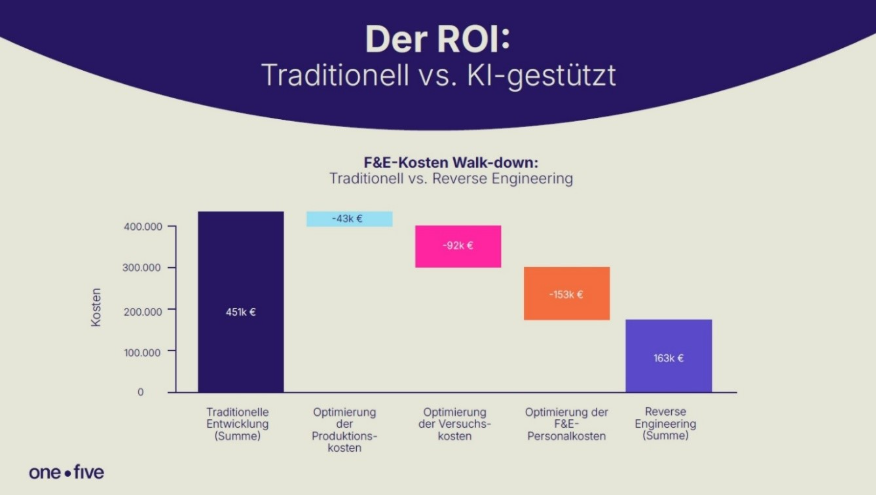
Comparison of traditional R&D costs versus reverse engineering. (Source: one.five GmbH)
Claire Gusko, co-founder of one.five GmbH, showed in her presentation how high-throughput data and AI are revolutionizing the development of sustainable, flexible packaging. One.five relies on reverse engineering, which avoids trial and error: clear performance targets define the training data set, and relevant material properties are identified and digitally screened. Practical examples demonstrate greater predictive accuracy, faster material selection, and lower R&D costs. This shortens innovation cycles, avoids over-engineering, and enables more efficient development of market-ready, sustainable packaging solutions.
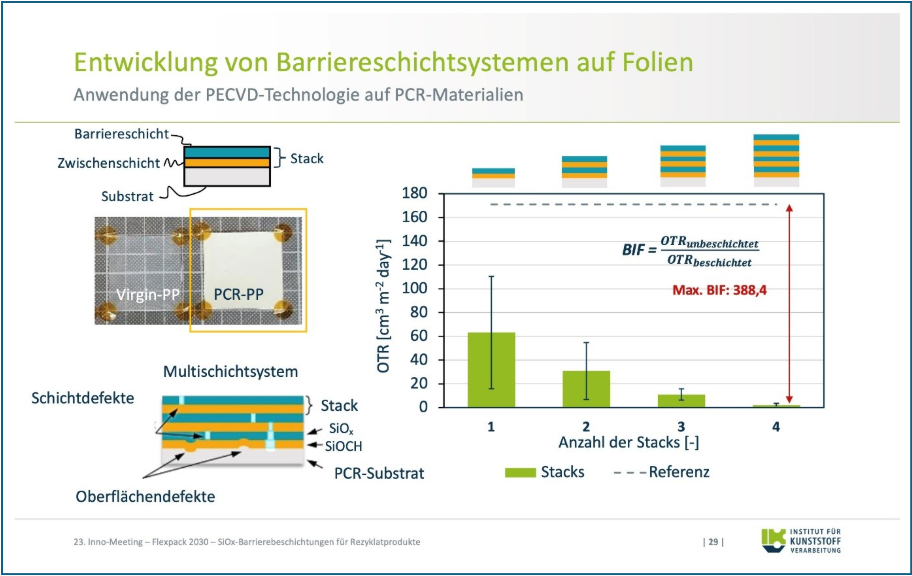
Multi-layer systems allow O2 barriers even on PCR films. (Source: Institute for Plastics Processing (IKV) in Industry and Trade at RWTH Aachen University)
Prof. Rainer Dahlmann from the Institute for Plastics Processing (IKV) at RWTH Aachen University presented the latest advances in plasma-based SiOx barrier coatings, with a clear focus on recycled films. The focus is on precisely controlled PECVD processes (Plasma Enhanced Chemical Vapor Deposition) and customized multilayer systems made of SiOx/SiOCH, which specifically optimize oxygen and migration barriers as well as adhesion.
The results of an iterative process show that a high barrier improvement can be achieved with both new PP and recycled PP, while at the same time significantly reducing migration caused by contaminants. Meanwhile, the layers remain recyclable—paving the way for food-contact-grade recyclates. The exciting thing about this is that potential contaminants remain outside the packaging.
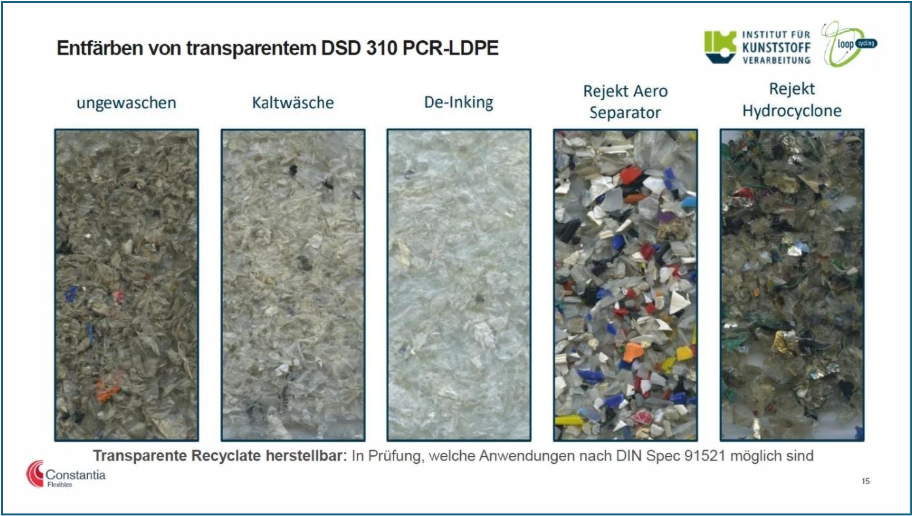
Better recycled material quality by avoiding solid-colored films or non-deinkable reverse printing. (Source: Constantia Flexibles)
Prof. Achim Grefenstein from Constantia Flexibles Germany GmbH showed in his presentation how innovative barrier and recycling technologies can be combined in a targeted manner to design flexible high-barrier packaging that is both high-performance and highly recyclable.
The focus was on mono-PE laminates with EVOH-reduced barriers, a RecyClass-compliant design and the required use of PCR content. In addition, he addressed optimization potential in advanced mechanical recycling, in particular by avoiding the use of dyed or non-deinkable films. The investigations currently underway in the field of PE can also be transferred to PP in the future. The holistic approach was supplemented by paper-based high-barrier solutions with ultra-thin film barriers.
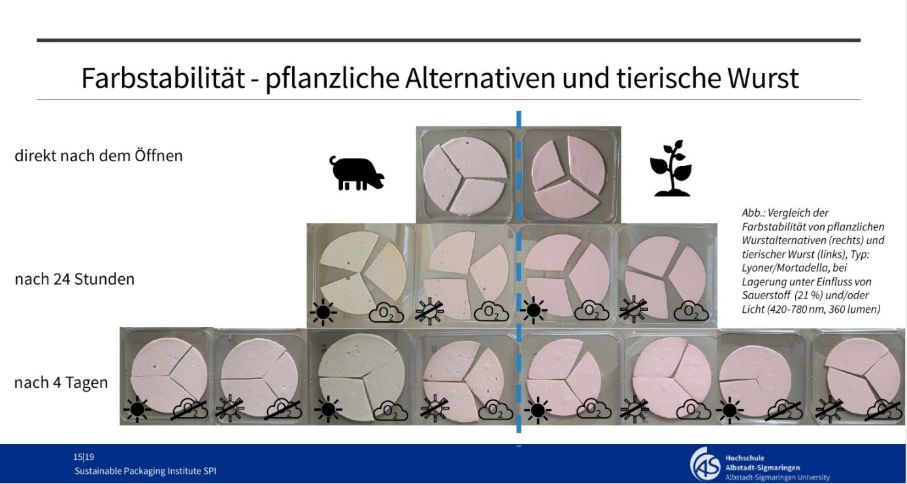
Color stability of animal-based sausage and plant-based alternatives under the influence of oxygen and light. (Source: Albstadt-Sigmaringen University, Sustainable Packaging Institute SPI)
Alina Siebler from Albstadt-Sigmaringen University analyzed the product-specific packaging requirements of vegan meat and sausage alternatives in direct comparison to animal-based reference products. The focus was on color and quality changes, particularly under the influence of oxygen, light, and different storage conditions. Initial laboratory results show that plant-based products are also sensitive to light and oxygen, but are less susceptible to oxidation than their animal-based counterparts.
The results provide scope for targeted optimization of existing packaging solutions. This requires further investigation into the design of suitable gas barriers for protective gas systems and effective protection against microbial spoilage or fat oxidation.
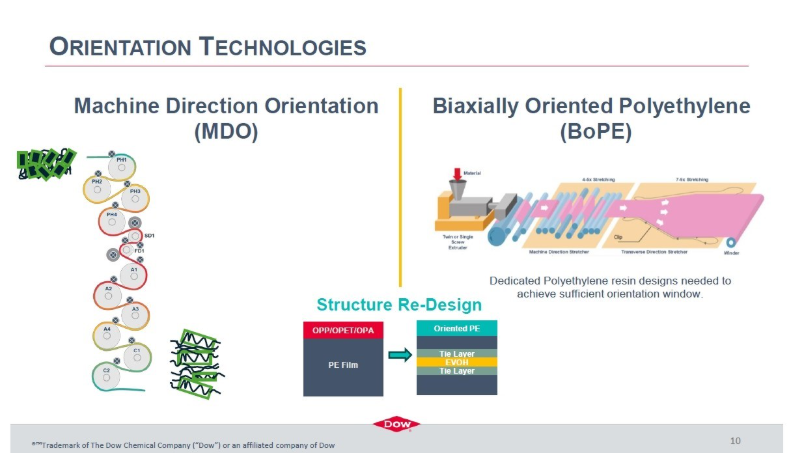
Orientation technologies are among the solutions for D4R. (Source: Dow Chemical)
Isabel Arroyo from Dow Chemical Ibérica S.L. illustrated how PPWR is fundamentally changing flexible packaging—towards recyclable, often PE-based structures with mandatory PCR use. The focus is on the technical challenges of monomaterial and PCR designs, particularly in terms of barrier performance, machine runability, and food safety. Key solutions include design for recyclability, orientation technologies such as MDO/BOPE, compatible barrier systems, and approved copolymers. Using stretch wrap and stretch film applications with REVOLOOP PCR, she demonstrated that high PCR content can be combined with reliable performance and that regulatory requirements (e. g. PCR quotas) and sustainability goals can be met on an industrial scale.
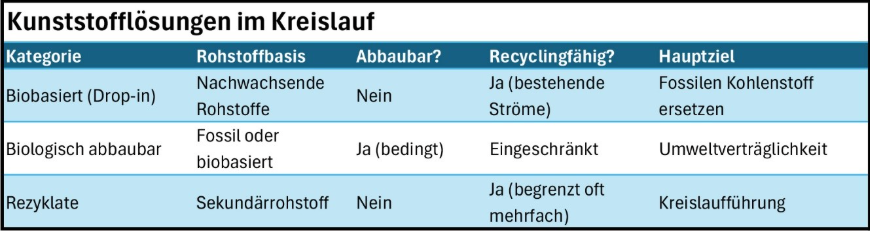
Plastic solutions in the context of sustainability – differentiated by raw material source and end-of-life path. (Source: pack.consult, AI-generated)
In his presentation, Patrick Zimmermann from FKuR Kunststoff GmbH questioned the limits of the circular economy. Recyclates and bioplastics are key levers, but they are not the only solution. Sustainability goes far beyond CO₂ reduction and requires a rethink along the lines of the 8R principles – from refuse to recover.
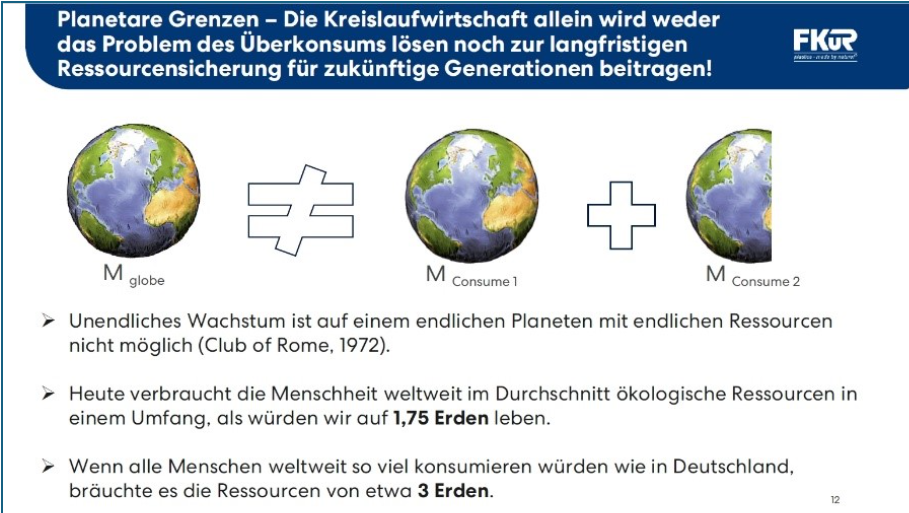
Circular economy will not solve the problem of overconsumption. (Source: FKuR Kunststoff GmbH)
Mechanical recycling suffers from price volatility and quality losses. Bio-based plastics can substitute fossil carbon, but face barriers in terms of cost, acceptance, and regulation. Higher recyclability, better collection and sorting, high-quality recyclates, increased use of bio-based drop-in plastics, and the targeted use of biodegradable materials where they offer real ecological added value are crucial for real progress.
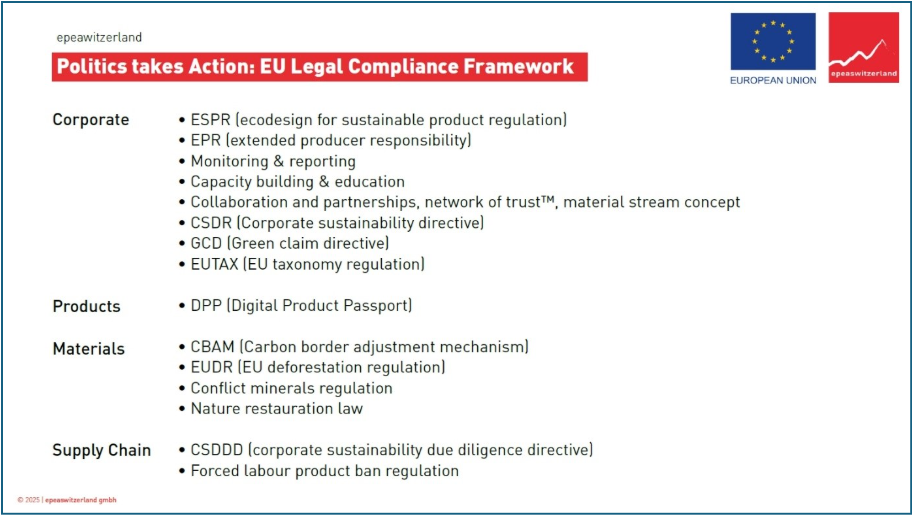
The Compass Cradle-to-Cradle approach involves compliance with complex European regulations and directives. (Source: epeaswitzerland gmbh)
In his presentation, Albin Kälin discussed how epeaswitzerland gmbh support companies in consistently anchoring packaging products in genuine circularity and mapping the complex EU requirements in a structured manner. As a knowledge trustee, epeaswitzerland procure sensitive product data, analyze it using ABC-X categorization based on ecological relevance, and create a digital product passport as an independent third party. This serves as a dynamic control instrument for compliance, material health, process design, innovation tracking, and recyclability, right through to take-back concepts. It thus offers opportunities to master the manifold regulations rather than merely administer them.
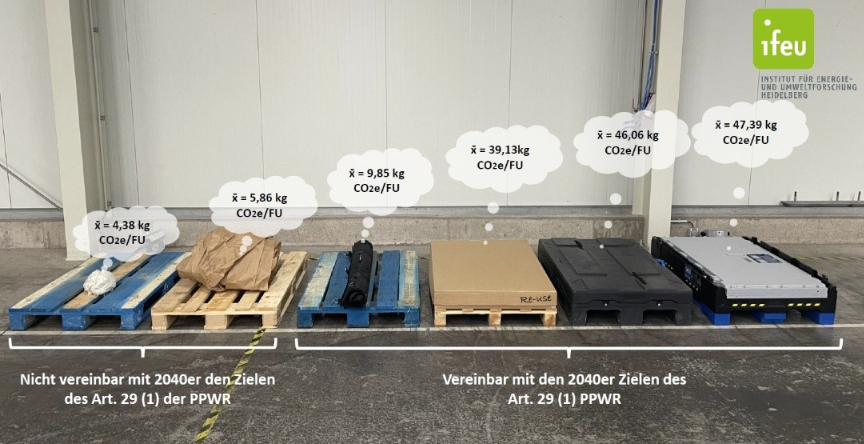
Replacing all single-use transport films with reusable solutions would result in additional CO₂ emissions of 32 million tons per year in Europe. (Source: IFEU Institute for Energy and Environmental Research Heidelberg gGmbH)
Benedikt Kauertz from IFEU Institute for Energy and Environmental Research Heidelberg gGmbH presented a life cycle assessment of single-use and reusable solutions for securing pallets under the (partially withdrawn) PPWR reusable quota requirements. Plastic and paper disposable solutions as well as flexible and dimensionally stable reusable systems were examined in terms of material use, circulation figures, transport efficiency, and greenhouse gas emissions. The decisive factors for the environmental impact are packaging weight, circulation figures, filling volume, and transport efficiency. Due to significantly higher masses and return transports, lightweight single-use solutions perform better ecologically than heavy reusable systems. A complete substitution of single-use transport films with reusable ones would significantly increase CO₂ emissions in Europe and would not be effective. Kauertz criticizes the requirement that 50 % must be reusable, which is no longer the case with a reusable pallet plus disposable edge protection and disposable packaging paper—the legislator needs to make improvements here.
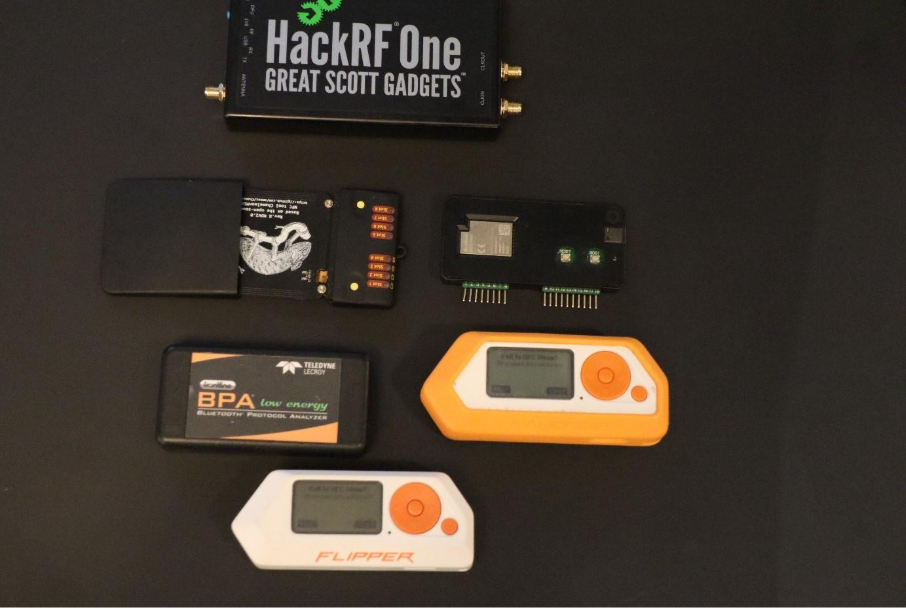
Hacking tools for attacking QR codes and barcodes. (Source: pack.consult)
Thomas Brenner, cybersecurity expert, highlighted security risks of digital technologies in and on packaging in his presentation. He pointed out packaging as a target for hacking and analyzed gateways such as QR codes, NFC, watermarks, and digital product passports (DPP). In a live hacking demonstration, he showed the current vulnerabilities of individual technologies and discussed security incidents in recent months. Finally, he presented possible solutions, protection options, and what to do if you have been hacked. The murmurs in the hall were an indication of the participants’ interest and the practical benefits.
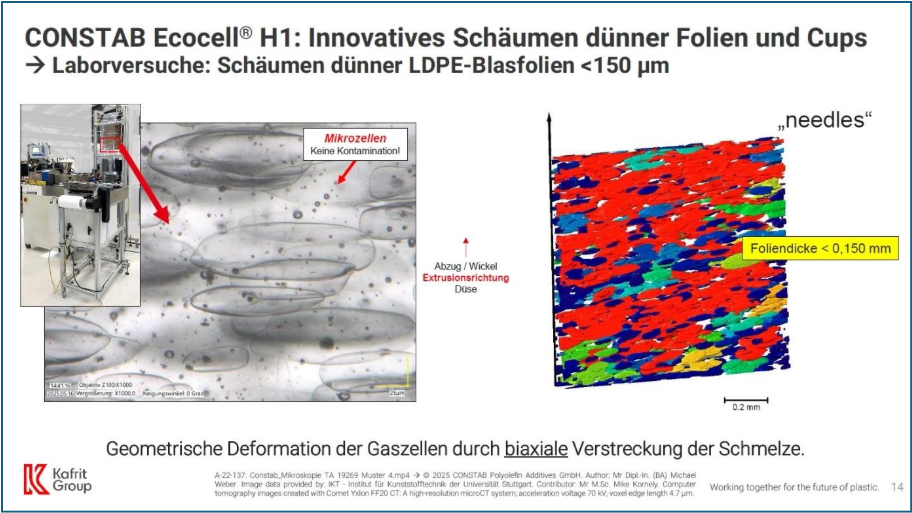
The gas cells of thin LDPE blown films are biaxially stretched. (Source: Constab Polyolefin Additives GmbH)
Michael Weber from CONSTAB Polyolefin Additives GmbH provided an in-depth overview of the Ecocell® chemical blowing agent masterbatch for foaming thin films and PP cups. The aim of its use is to significantly reduce weight and material consumption, as well as to sustainably lower energy consumption and cycle times. He explains the endothermic decomposition of the blowing agent, the formation of homogeneous, reliably fine cell structures, and the resulting effects such as significant density reduction, improved thermal insulation, minimized warping, and an attractive, paper-like matte appearance. Practical examples from drinking cups and LDPE/PP films as well as results from the pilot plant at the Rüthen technical center underscore the industrial feasibility.
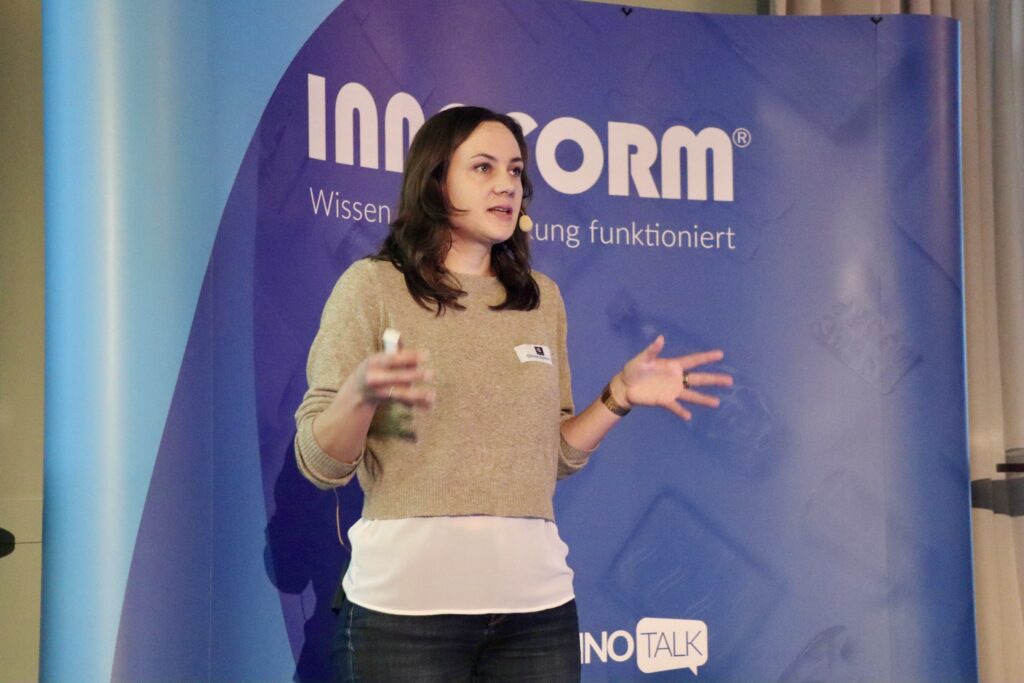
Olivia Kelnreiter from Packa demonstrated that PPWR readiness is less a question of materials than of data. Many companies struggle with unstructured specifications, analog or digital data silos, and a lack of transparency. “Packaging Specification 3.0” completely digitizes specification data, automatically reads it using AI, and makes it usable in a structured way after a sanity check. This makes it possible to identify and close data gaps, evaluate recyclability, perform ESG analyses, and efficiently meet regulatory requirements—laying the foundation for better decisions, cost transparency, and sustainable packaging strategies.
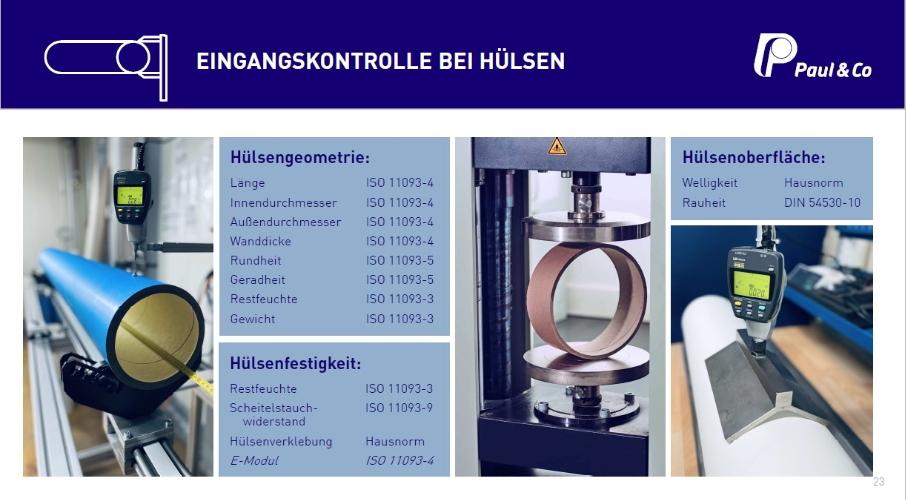
The quality of a winding core depends on numerous parameters. (Source: Paul & Co GmbH & Co KG)
Kilian Kunert from Paul & Co GmbH & Co KG provided a comprehensive insight into the product range and manufacturing methods for winding cores. The products are manufactured from up to 100 % recycled paper using spiral, parallel or longitudinal winding processes. In addition to high strength and precision, the portfolio offers specialized solutions for clean rooms or food films. Digital added value such as RFID and custom printing optimize logistics and traceability. A central focus is on sustainability: Material-optimized, high-strength cores with smooth, soft, or adhesive surfaces effectively reduce the carbon footprint per piece and waste along the supply chain—all made from recycled materials, of course.
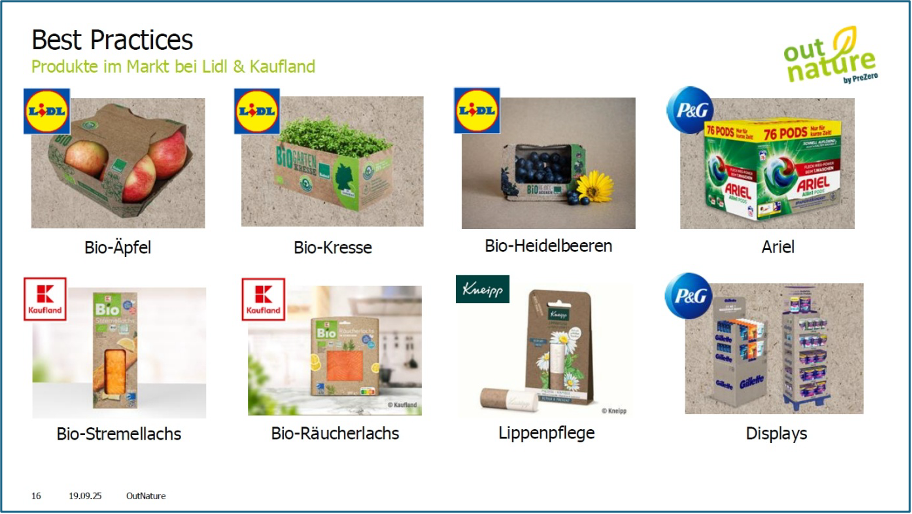
Packaging made from cup plant in Lidl and Kaufland stores. (Source: OutNature GmbH)
Thomas Strieder presented OutNature as a supplier of alternative fibers made from cup plant and straw for the production of sustainable paper and packaging products, including on an industrial scale. This involves the regional use of agricultural residues, shorter transport routes, and cascading raw material use. Papers made from cup plant and straw fibers are fully integrated into the waste paper cycle. Silphie papers focus on their low carbon footprint, while straw fiber papers significantly increase strength compared to conventional waste paper thanks to their specific fiber structure. Products in Lidl and Kaufland stores and the collaboration with Procter & Gamble demonstrate the market readiness of the solution. The first project alongside the paper machine will be implemented this year with Leipa.
Dr. Ernst Simon from Flexible Packaging Europe outlined in his presentation the growing EU regulations with far-reaching changes for food contact materials. The revision of the FCM Framework Regulation is gaining momentum and, among other things, paves the way for a reduction to 6 material types instead of the previous 17. At the same time, a paradigm shift from a risk-based to a hazard-based approach to substance evaluation is being considered.
A new logic for proving conformity and stricter purity and documentation requirements are to be established, while at the same time pressure is increasing due to PFAS requirements under the Packaging and Packaging Waste Regulation (PPWR). The lack of harmonized testing methods increases the uncertainty. He also outlined the challenges associated with the use of recycled materials in food packaging, which effectively make the use of mechanically recycled polyolefins in food packaging the exception. Another problem is the increase in regulations that directly or indirectly affect packaging and are sometimes contradictory.
In the live podcast of the first episode of “FlexPack News,” which will be released monthly, Julian Thielen moderated a panel discussion on the future of the flexpack industry. Also participating were Jan Grevé from ppg and Daniel Zimmermann from Felix Schoeller.
The focus was on current news from the trade media, such as recycling rates, new EU regulations, and transparent CO₂ balances—including the precise recording of Scope 1, 2, and 3 emissions. Discussions centered on proprietary software solutions and ERP systems for calculating the product carbon footprint, strategic sustainability investments, and the challenging development of high-performance, recyclable laminate structures.
A particular focus was placed on paper-based packaging solutions using extrusion and dispersion coating. Extrusion allows plastic layers of just 3 µm to be applied to paper—a decisive factor in resource efficiency and recyclability.
Other topics: Design for recycling, quality differences in recycled materials in Europe and Asia, and the urgent need for close cooperation with machine manufacturers. With regard to the implementation of the PPWR requirements by 2030, the industry has only a narrow window of opportunity for innovation and transformation.
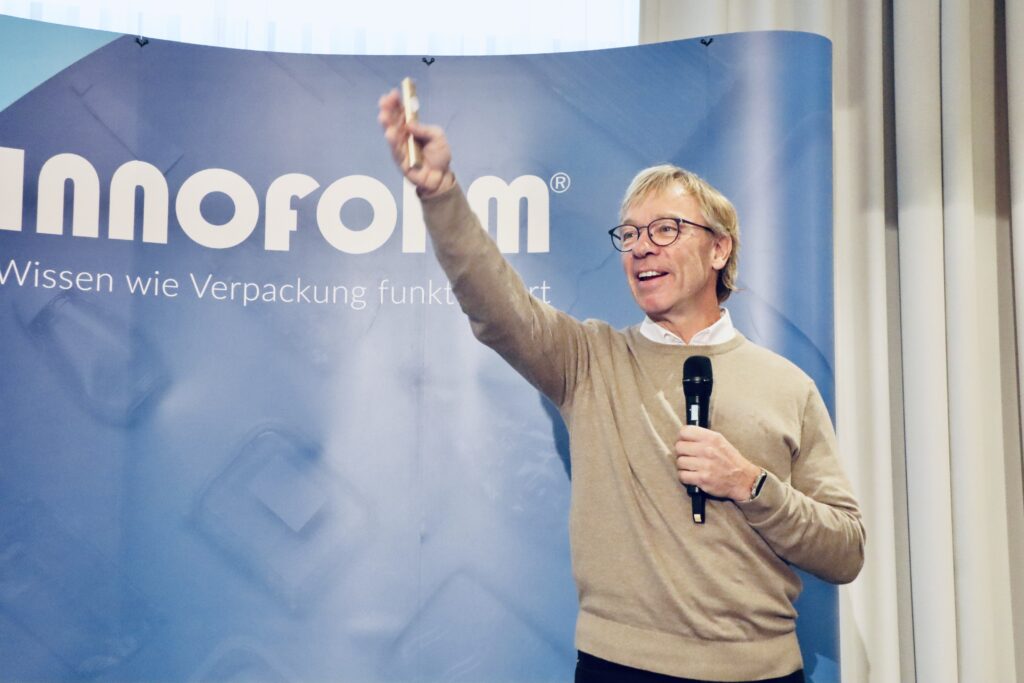
Karsten Schröder brought the 23rd Inno-Meeting to a close with a concise overview: he succinctly summarized the key messages and highlights of the presentations, once again drawing attention to the decisive impulses of the event. Surprising and encouraging: more than half of the participants wanted to implement concrete changes in their daily work and thinking around Flexpack 2030 the very next day – according to the positive results of the concluding audience survey conducted as part of the summary.
Upcoming Events
February 2027 – June 2027
All upcoming events can be found in our event list. You and your colleagues can register for all listed events today.

24. Inno-Meeting – Flexpack-Kreisläufe, die sich rechnen
Tuesday, 16 / Wednesday, 17 February 2027 – Start 9:00
Add to calendar: Google · Outlook · Calendar file