
Europe wants more recycling. The PPWR introduces mandatory recycled content quotas, Design for Recycling is becoming the standard, and hardly any sustainability strategy gets by without the circular economy anymore.
So the mood in the recycling industry should actually be excellent.
It is not.
At the BVSE Altkunststofftag (plastics recycling congress) in Bad Neuenahr, one thing became very clear: While politics and industry formulate ambitious targets, many plastics recyclers are currently fighting for their economic survival.
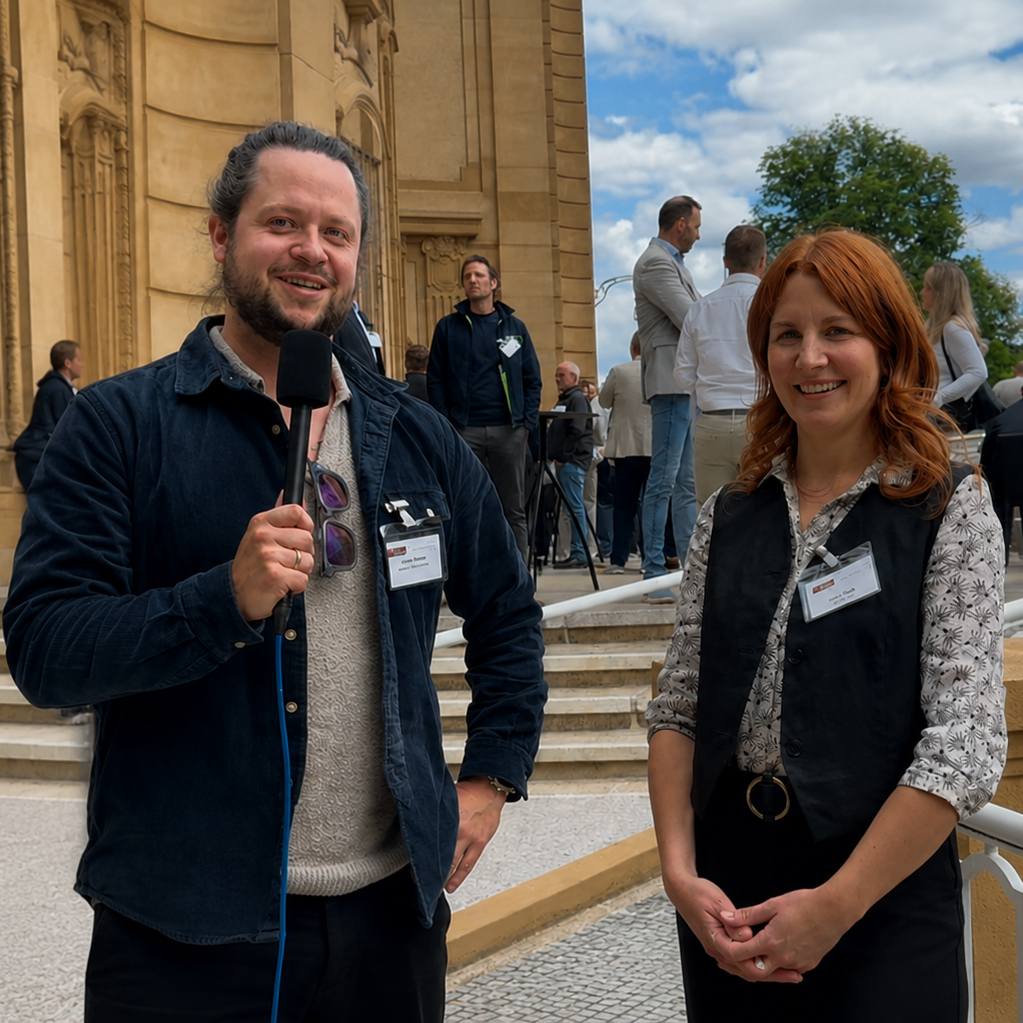
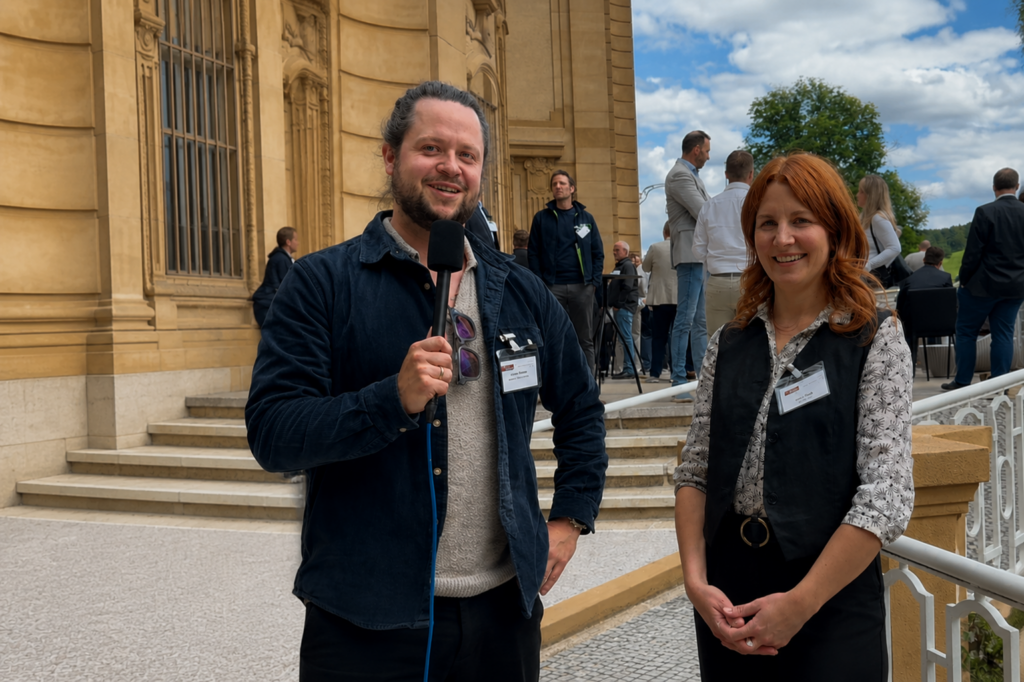
In a conversation with Anna Roeb, officer of the plastics recycling division at BVSE (the German federal association for secondary raw materials and waste management), it quickly became clear: The real problem is no longer the will to recycle. It is the framework conditions.
The circular economy needs more than good intentions
BVSE mainly represents small and medium-sized recycling companies. It is precisely these companies that are supposed to supply the raw materials with which the European packaging industry is to meet its statutory recycled content quotas.
Yet it is precisely these companies that are coming under ever greater pressure.
Cheap virgin plastics and recyclates from third countries are pushing down prices. At the same time, the bureaucratic burden keeps growing. Permits take a long time, investments are made more difficult, and many companies are increasingly losing planning certainty.
For Anna Roeb, this is a dangerous development.
Because recycling capacities cannot simply be switched back on once they have disappeared.
“You don’t rebuild capacities overnight.”
While Europe is debating future quotas, the very companies that are supposed to fulfil those quotas later could disappear.
Germany is at risk of losing its lead
Germany was long regarded as a pioneer in plastics recycling.
Today, other regions are investing far more aggressively.
China in particular is massively expanding its recycling industry and bringing more and more recyclates onto the world market. At the same time, European recyclers are coming under ever greater cost pressure.
For BVSE, this raises a simple question:
Why don’t we protect a key industry of the circular economy more strongly?
After all, this is no longer just about environmental policy, but also about security of supply, regional value creation and resilient supply chains.
Flexible packaging faces a particular challenge
For manufacturers of flexible packaging, the situation is even more complicated.
Mechanically recycled polyolefins are not yet available for many food applications today. At the same time, brand owners demand films that are as transparent and visually flawless as possible.
And this is exactly where the problem begins.
Large-area printing, inks and additives make mechanical recycling considerably more difficult. During the recycling process, discolourations or small inclusions occur that later become noticeable in the recyclate.
For Anna Roeb, one thing is therefore clear:
The most important lever lies right at the beginning of the value chain.
Not with the recycler.
But with packaging design.
Design for Recycling decides today which raw materials can be used again at all tomorrow.
Chemical recycling remains a beacon of hope
Many companies are therefore placing great expectations in chemical recycling.
Indeed, it could help in the future where mechanical recycling reaches its limits today – especially for food packaging made of polyolefins.
But approved processes and, above all, industrial quantities are still lacking.
The technology is developing quickly.
The market, however, is not yet in a position to take over supply in the short term.
Credits instead of standstill?
An exciting point of discussion at the Altkunststofftag was so-called recyclate credits.
The idea behind them:
Companies that already use more recyclate than required could transfer part of this performance to companies that are not yet technically able to use suitable recyclates.
For BVSE, however, such a system would only make sense under one condition:
The material streams must remain of the same substance.
An LDPE manufacturer should therefore not simply be able to buy PP credits.
Only then is the ecological benefit preserved and no pure certificate trading without any real circular effect emerges.
Why action is needed now
I found the idea of a so-called accumulation phase particularly interesting.
Companies could have recyclate quantities they already use today credited later against the statutory PPWR quotas.
That would finally create an economic incentive not to wait until 2030, but to build up supply chains and utilise recycling capacities now.
Because one thing seems certain:
As soon as the PPWR takes full effect, demand for high-quality recyclates will rise significantly.
The decisive question is simply:
Who will still be producing these quantities then?
Eco-modulation: Europe shows that it works
BVSE also sees an urgent need for action on packaging licence fees.
Sweden and France have been showing for years that eco-modulation works.
Those who develop recyclable packaging or use recyclates pay lower fees.
Germany, by contrast, has been debating this instrument for years.
The legal basis exists.
Consistent implementation is still a long time coming.
My impression
After this conversation, one thing above all stays with me:
In the packaging industry, we talk about recyclability very often.
Perhaps in future we will talk just as intensively about those who make recycling possible in the first place.
Because without economically healthy recyclers, Design for Recycling, recycled content quotas and the circular economy will ultimately remain political goals on paper.
The infrastructure for this will not come into being in 2030.
It is being decided right now.
