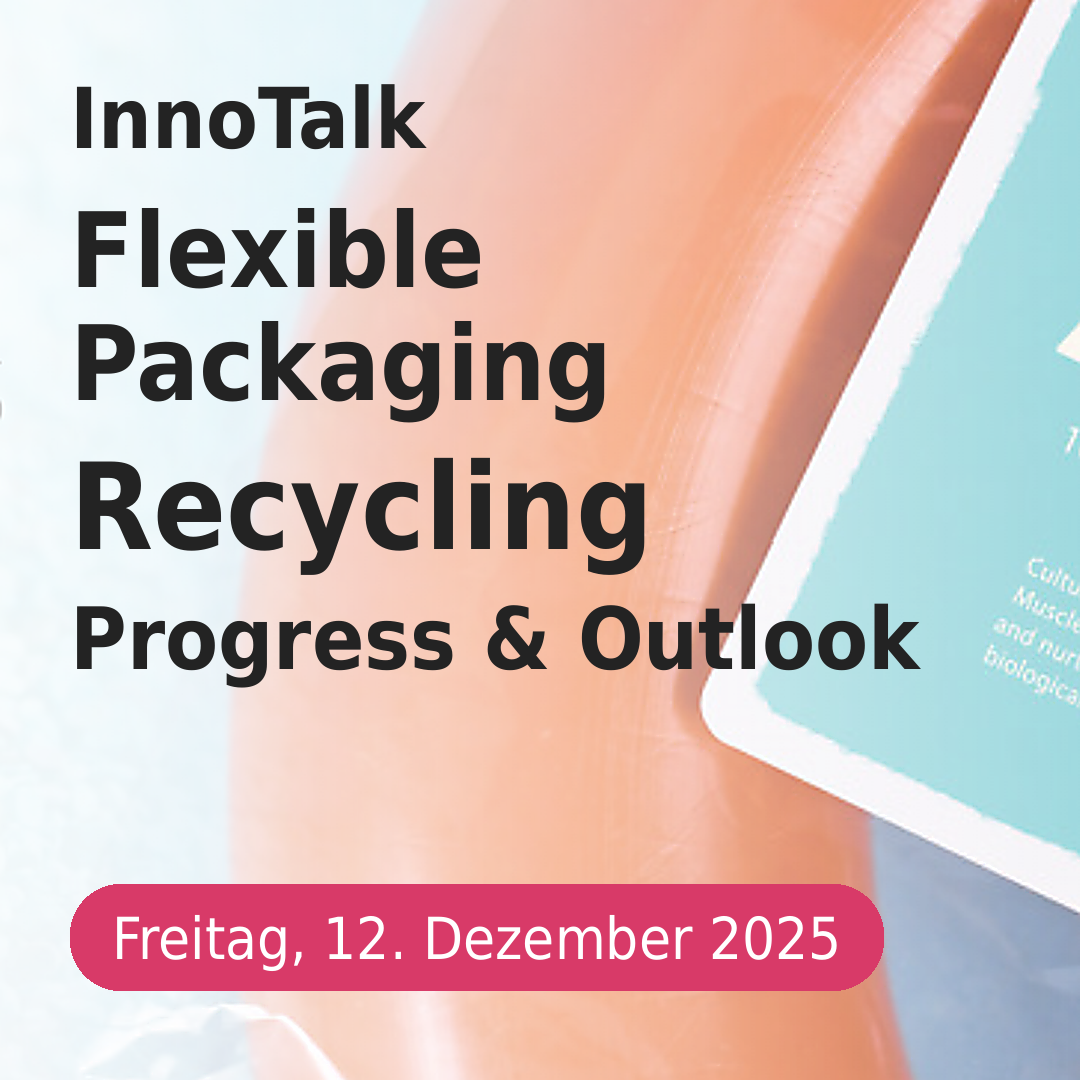
This InnoTalk episode—an initiative by Innoform Coaching—featured Haulwen Nicholas (CEFLEX) and was moderated by Guido Aufdemkamp (Flexible Packaging Europe, FPE). (CEFLEX)
Flexible packaging delivers strong resource efficiency and product protection, but it remains challenging to sort and recycle at scale—especially when structures include multiple layers, inks, coatings, adhesives, and functional barriers. CEFLEX addresses this gap by aligning the full value chain around practical, evidence-based guidance for packaging that can be collected, sorted, and mechanically recycled more reliably. (CEFLEX)
What CEFLEX is and why it matters
CEFLEX is a collaborative initiative that brings together stakeholders across the flexible packaging value chain—material suppliers, converters, brand owners, waste management, sorting technology, recyclers, and others—to remove technical and business barriers to a circular economy for flexible packaging. (CEFLEX)
The core idea is pragmatic: recycling outcomes are determined by the system, not by a single material choice. “Monomaterial” intentions can fail if a pack cannot be correctly identified in sorting, or if the resulting reprocess cannot produce usable recyclate. CEFLEX therefore focuses on design choices that work in real-world collection, sorting, and recycling conditions.
The D4ACE guidelines: practical design rules, continually updated
A central output is the “Designing for a Circular Economy” guidance (often referred to via the CEFLEX guidelines platform). It is intended as a practical reference for packaging teams—helping translate recyclability principles into specific design decisions that increase the likelihood of successful sorting and mechanical recycling. (CEFLEX D4ACE)
An important point from the talk: the guidance is not meant to be static. As sorting infrastructure evolves, test methods improve, and new evidence becomes available, recommendations need to be refined. This is particularly relevant as regulatory and market expectations move toward clearer proof of recyclability performance.
From consensus to evidence: the Phase 2 testing programme
A major focus of the session was the shift from expert consensus to a robust evidence base. CEFLEX’s Phase 2 recyclability and sortability testing programme generated independent data intended to strengthen design recommendations and make them more defensible for industry decision-making. (CEFLEX D4ACE)
The programme’s intent was straightforward: build transparent, comparable results on how representative flexible packaging structures behave in sorting and mechanical recycling—so designers and brands can accelerate better designs with higher confidence. (CEFLEX)
Why “sortability” is as important as “recyclability”
Even the best-designed structure cannot be recycled if it fails at the sorting stage. That makes detection and correct routing (for example via NIR-based systems) a practical gatekeeper for circularity. The session underlined that design for recycling must be anchored in the realities of sorting performance, not only in polymer chemistry.
What packaging teams can take away
Three operational lessons follow directly from the CEFLEX approach:
- Design for end-of-life from the first brief
Barrier, sealing, print, and aesthetics must be balanced with expected collection and sorting routes—otherwise redesign cycles become costly and slow. - Treat the pack as a set of “recyclability-relevant components”
Instead of debating a package as a whole, break it down into base materials, barrier layers, inks/coatings, adhesives, and functional features—then evaluate how each component influences sorting and recycling outcomes. - Use data to reduce uncertainty
Where test data exists, it can replace assumptions and help teams align internally (R&D, procurement, marketing) and externally (converter, recycler, compliance). CEFLEX’s aim is to make such evidence easier to access and apply. (CEFLEX D4ACE)
What’s next: continuous improvement and industry alignment
CEFLEX’s direction is clearly toward continuous improvement: updating guidance based on test evidence, focusing on the most relevant open questions, and strengthening alignment with wider industry efforts. CEFLEX has also communicated that findings from its work have informed European standardisation work on recyclability testing for PE and PP flexible packaging. (LinkedIn)
Conclusion
This InnoTalk episode highlighted a shift the industry increasingly needs: from good intentions to measurable recyclability outcomes. CEFLEX’s structured guidance plus large-scale testing helps packaging teams make design choices that are more likely to succeed in real collection, sorting, and mechanical recycling systems—while creating a common language across the value chain. (CEFLEX)
Haulwen Nicholas (CEFLEX)
Haulwen Nicholas is a Work Package Consultant at CEFLEX and has led CEFLEX’s Phase 2 design testing programme on sortability and mechanical recyclability of flexible packaging. (CEFLEX)
Guido Aufdemkamp (Flexible Packaging Europe, FPE)
Guido Aufdemkamp is Executive Director of Flexible Packaging Europe (FPE), the European industry association representing flexible packaging manufacturers, and he moderated this InnoTalk session for Innoform Coaching. (flexpack-europe.org)
Transkript
Hello everybody to the 39th Inno-Talk here on Friday afternoon. Flexible packaging, recycling progress, and outlook is our topic today. And we have only one speaker, but we have a very interesting topic. We are looking to see Flexpack and all the investigations they did so far and what they are planning for the future. Um, uh, like, uh, everywhere, every time. I just wanna start with a short introduction, and I would like to say thank you to all the supporters and sponsors of the Inno-Talk concept.
And everyone on this screen is invited to join this community and help, um, to make flexible packaging knowledge available for everybody. And, uh, this is what we would like to do with this Inno-Talk initiative. Um, we have, we are going to have two new conferences next year together with Union TE in our new employee, uh, colleague in, uh, in form. And, uh, one very interesting, uh, thing, which also matched to the topic today is Inno-Fiber, fiber based packaging, functional papers for packaging applications.
We start on April the 15th, and we are still looking for some speakers. So if you want to talk about fiber based packaging, especially flexible packaging and functional papers, you are, uh, invited to, uh, give a presentation at this, uh, meeting in April in Germany. And the other new thing is Inno-Circle, which is, uh, eco-friendly flexpack from design to recycle packaging in July in Burg, together with the South German plastic Center, SKZ. And, uh, also this is, um, moderated by Yuan.
And, uh, we are, uh, a bit excited what this new concept will, uh, will bring to us, um, the next Inno-Talk in February. Digitization is a key to PPWR compliance, AI, and standards. And this is really a very surprising topic because, uh, we have some experts, uh, two experts there who tell you or show you how AI can help you to, um, match or meet all the requirements from PPWR, which also is what we are talking about today as well.
And, uh, now you see the platform of Inno-Talk, which is a bit different to other, um, platforms for online meetings in the center, you have the video stream, and underneath you have the interactive menus. So you have the showrooms from the supporters, you with, uh, additional information to this topic. Then you have the participants list. And on the right corner you see, uh, the button my events at the top of the screen. And if you click on my events, you switch over to the event to go.
Don’t do it now, do it later after the event. Then you see the whole participants list. What you see here is only the, the list of the live, uh, people looking to the video stream. But if you want to see the 300 and a bit more participants, you can click on my events and then to the Inno-Talk. And of course, you see the agenda. And in the agenda there is a download link to the, um, presentation from we, uh, uh, uh, uh, enjoy in a few seconds. This is the agenda.
Uh, G***o from Flexible Packaging use will guide you through the, uh, program today. And, uh, I go quick through the, my first question, uh, with Slido to test the technique, do you use recycled, uh, Rezyklat for flexible packaging? Do you use Rezyklat for flexible packaging? That’s, uh, a very interesting question. A friend of mine told me, because he thinks all, um, food packaging is all, uh, is already recycled. He’s not out of our business. But it isn’t. But are you using Rezyklat for flexible packaging?
Only one vote. This is not so much. We have, uh, around 100 live participants, but we keep, must keep in mind that our team session is 15, 20 seconds beforehand the live stream. So 24, 50, 50, more or less, 28 votes so far. Oh, that’s surprising. More or less, half of all the participants voted so far, say, yeah, we are using a bit, less 40%, 33 votes, ah, some more please. 36. If you don’t see the, uh, vote on the right hand side next to your screen, then you have to scroll down and, uh, click the button interaction.
Abstimmung und Community-Partizipation
Or you can also vote with a phone. If you make a photo of the QR code, then you belong directly to the Slido community and can vote as well. So 40 votes, that’s the indication that really people are watching live. So more or less, one third says yes, and two thirds say, no, we are not using anymore, but in 2030 we have to use Rezyklat for flexible packaging. So let’s go into the topic for today. And I would like to hand over to G***o Amp. Yeah, thank you very much, Karsten.
Um, and it’s a great honor to, uh, moderate again, the, the last Inno-Talk Europe for this year or the generally the last Inno-Talk for 2025 and then the 26th, uh, uh, year will start with a celebration of the 40th, uh, Inno-Talk. Um, completely that’s kind of a celebration anniversary. Um, I am, uh, a bit surprised that already one third of the participants are using Rezyklate, um, as I always hear about the difficulties using Rezyklate. But, uh, no, it’s a great comfort seeing that many people are already using.
Um, so it’s now my pleasure to introduce the sole speaker of today that show whether it’s premier, but it’s very rare that we only have one with us. Uh, but nevertheless, it’s even more important. And, uh, I’m happy to have you here. Uh, Holland. Nicholas, um, may introduce Holland, uh, to you. She is in her current role, mainly, uh, the workstream consultant for C Lex. But she has a vast, uh, and long history and experience in, um, packaging.
She holds a degree in environmental biology, a diploma in packaging technology, and is working since, if I may, decades already in packaging, uh, sustainability. Um, so Holland, you were ahead of the time, so I, I must almost say, uh, and when, when I look at your CV, you were also involved in Wrap, the, uh, Waste and Resource Action Program in the UK, um, which was a bit leading at this certain point then, um, yeah, pausing a little bit.
And now you have the, or the UK at least have the great challenge to introduce a kind of EPR scheme in the next few years. Uh, changing consumer’s life entirely, I would say, uh, at least regarding packaging collection and recycling. Um, at Flexpack Holland is leading the testing program to update the, uh, design for circular economy guidelines. And she will explain that in much more detail and how complicated and complex that area is.
Um, I have the great honor to present today Holland from Flexpack, as was my former colleague and, uh, others, uh, and me involved who basically initiated Flexpack, uh, 10 years ago or we a bit more than 10 years ago. And I remembered very well when, uh, I was, uh, with Graham Holder, um, in a sub-basement office. And when we kept talking about this necessity to have this value chain initiative, um, then we actually made it happen.
But no one of us has ever believed the enormous size Flexpack would become and how important and essential for the entire flexible packaging Holland has become, at least for the experts and the non-experts still have to realize it because without Flexpack, we will get nowhere. Um, so it’s not my pleasure, Holland, uh, to give the floor to you and, uh, guide us through all the work or the, the, the detailed work for the guidelines, uh, Flexpack has done so far. Thank you very much. That’s great. Thanks.
So good afternoon everybody and thank you very much for that, uh, introduction. Um, I think a lot of people who are joining the call today are familiar with Flexpack, but I am just going to give a bit of an introduction about who Holland is and what we represent. Um, but I’m looking forward to be able to talk through with you about our designing for a circular economy design guidance, talk about, um, what steps we’re taking, about our latest updates and where we think we need to be going in the future as well.
Wertschöpfungskette Flexible Verpackung
When we think about, um, the packaging, flexible packaging value chain, we have to remember that there are lots and lots of parts to the value chain. And this is where Flexpack pulls that value chain together, ensuring that we are looking at each of the single stages and we’re involving stakeholders who represent each of the stages of the value chain. This includes people like material producers, those who produce the resins and the raw materials that go into making the films.
We then have film producers and converters and brand owners and retailers, and then also we have some waste collectors and recyclers. And that really helps to form that whole flexible packaging ecosystem. And currently we have over 180 stakeholders to help us and guide us about what is happening in the value chain to ensure that we’re collaborating through each stage our vision and our mission. Flexpack has always been about the collection of all flexible packaging.
So although today I will focus on PP and po uh, flexible packaging, we do also look at paper based flexibles and also aluminum based flexibles as well, which is something that we’ll be doing more of next year. But our aim is really that over 80% of materials entering a recycling process should be returned to the economy. And what we’re seeing is that the PPWR is highly aligned to our mission circular and that we established back in 2017.
Now, we do know that we have a critical window to act now that we’ve got the PPWR uh, coming through. We’ve got from now, now the end of 2025. We probably should send change that soon to 2026 to really look at why design matters and how we can use that to implement a circular economy for flexible packaging. We need to look at the business case and the fact that it lowers the cost of recycling materials and we can get higher yields as well. It gives better access to those markets.
We really need to look at the quality as well. We want to improve the quality of that, recycle it. And we also want to look at, you know, what is a circularity as a whole? How can we ensure that it gives compliance and improves recycling rates right across, um, all areas of flexible packaging? It’s such a clear area, and design is so important that we get that right at the start. So if we don’t get that right, then we compromise everything else that follows.
So we do have that critical window, and we already know that the PPWR has been published and entered into force, and we know that the send design guidance, uh, for recyclability standards are being established and are going to be published probably in Q1 of 2026. There’s PPWR delegated acts coming through in 2027 and 2028, and we know that by 2030, all packaging needs to be recyclable by design. And only packaging with recyclability grades of A to C are gonna be allowed on the market.
So it’s really important that we’re focusing on design at very, very early stage. EPR fees are gonna be linked to recyclability grades, and we know that mandatory recycled content is coming for the plastic part of the packaging, and that’s 55% plastic packaging. Recycle rate is gonna be something quite a tough challenge for flexibles. So it’s really interesting to see that some of you are already embracing those challenges that are coming ahead. So we’ve got further than 2030.
There’s other things that we need to be considering. There’s the plastic re flexible packaging, recycling at scale, and we also need, we’ll be looking at only grades, higher grades of A and B will be allowed on the market. So there’s a big, uh, path that all of us to follow. There’s got to be lots of innovation. There’s got to be lots of thoughts about how do we reach each of these legislative milestones and things like design guidance.
Sortierung und Recyclingqualität
These can help us to think beyond some of the initial targets so that we’re preparing for the future. I just get my slides not to moving forward. There we go. So we now really to think about that design beyond 2030. What new practices are you going to need to put into your businesses? What are you going to need to do to stay ahead of the curve? When we think about the, um, EU legislation that’s coming through, we need to drive progress really to drive it more quickly, to get to the circular economy.
And as I’ve mentioned about improving the recycled quality, but also the consistency. We also need to look at sorting yields. How do we improve that? How do we increase the sorting yields across those existing infrastructures? How do we improve the use of the existing equipment, but also think about new technologies going forward? But what can we do also to support the use of recycled materials in more demanding applications, such as food-grade applications, where we know that is particularly a problem.
And we also may need to make those decisions faster. We need to be clear on the decision-making process. We need to know and have the education right through the value chain on how we procure the right materials, how we ensure compliance and how we integrate design as a standard way of, of complying with legislation in the future. So designing for a circular economy is really something that is a big focus for everybody now.
And we need to look at the, uh, it being used as roadmap for legislation so that we can make sure the packaging is designed ready before that legislation comes in. And when we look at the CFL designing, uh, for a circular economy, D4ACE guidelines, they’re very much a detailed and practical guide to help you to meet those challenges, not only today, but in the future. It gives us a foundation for making flexible packaging circular so that we can achieve those legislative targets.
And when you think about flexible packaging, we are thinking about the core design requirements as well. We know that we need to be thinking of end-of-life design, and there’s still a lot of focus. And we need to ensure that we, it’s designed for collection, for suitability, for technical recyclability, and we need to be thinking about the long-term future, about recycled content and how it can be used in different applications.
But we have to remember that that packaging there is there for a reason, is to provide protection. It’s to VA to preserve the products. It’s to provide functionality and go usage and ease of use. And with our populations getting older, that’s also important as well. But we need to ensure that we’ve also got the legal information and the marketing information and the use information we can sometimes within the design process, forget that the packaging is there for a purpose as well.
So it’s very important that we design it right for the product, and we also design it right for end of life. So now let’s think about our designing for a circular economy, D four ACE design guidance. Now this has been designed based on the European, um, systems and what we have as best practice across Europe, but it has been downloaded and consulted by over 20,000 individuals already since it was released in, uh, 2020.
And that’s packaging designers, researchers, technologists, and it’s coming from international companies and organizations. Some of them are using them as the guidelines themselves. Some of them are actually helping them to develop their own processes internally. And we know that the users are, this is very strong base in Europe, but we do know that there’s a lot in Asia Pacific and in the Americas as well. So it is actually being used globally.
Zukunftsorientierte Design-Richtlinien
And we do know that in other areas that they are used to design guidance to develop their own guidance as well. But our also helps to, uh, implement and consider what the EPR schemes needs. We know that it’s, IM, it’s also influencing what is happening in the European Committee for Standardization. And a lot of the evidence then that we’ve had in phase two testing program has been shared with CEN. So it can help develop new guidance. So these guidelines are very important for everybody within the value chain.
And what we really, really want to focus on is being that future ready. We need to be considering how we’re all going to meet those recyclability performance scores that are going to be enforced legally. And that’s coming from 2030. 2030 is not far away. You know, we’re just about 2026. We all know how long it takes to do development. So we have got a ramp up and really start getting future ready. As we’ve already mentioned about improving high quality recycle.
It’s something that we repeat and trying to get that message across, but also it’s essential for us to be able to hit those recycle content targets. But also we need to avoid costly redesigns. Um, sometimes you, you were saying, well, I just, I don’t wanna redesign multiple times. I want to be looking ahead and just redesigning once. Um, and we don’t wanna rush the compliance efforts. So this is where, you know, looking at design guidance can help think beyond 2030.
So when you’re thinking about how do you de uh, design this new packaging, it’s not just about the film, it’s about the machinery that you’re actually making the film with. It’s about the packing lines that you’re running, those packaging flexible materials on. There are so many other areas that are impacted and we know that there’s CapEx and everything that needs to come in with that when you’re doing some of these design changes.
And of course, all of this is gonna support the EPR schemes and it’s applying that EQ modulation, uh, based on actual design outcomes, very much focused on actual design going forward, not just theoretical claims. So we really need to look at how going forward, designing for recycling criteria and send standards align with the EU regulations.
So phase two was a major update, and it’s something, it’s a project that IPM particularly leading to look at helping us to get test data to actually design, uh, packaging and ensure that we’ve got the data to back up those packaging designs and update the design guidance. So this has been a project that’s been going on for some time, um, and it’s been going on for a few years. And it’s very much about producing robust independent data so that we can actually strengthen flexible packaging design guidance.
When we started this project, we were looking to identify any knowledge and data gaps. We also needed to work very much across the whole value chain with all of our stakeholders to give advice and materials and support. But also what’s very, very important is that we worked with leading universities and laboratories so that we could review the methodologies that we were, uh, being used to test, but also review the data so that we could then update the design guidance.
And we’re very, very grateful that we actually managed to get a quite substantial amount of external funding from the UK Research and Innovation Fund, which allowed us to do the volume of testing that we were able to do. And we’ve worked with Queen’s University Belfast, Massey University and GT, as well as, uh, Pro Plast, uh, Cyclo, HTP Impact Solutions and NTCP and APL to actually deliver this program across both mechanical recyclability testing and also sorting testing.
Datenbasis und Stakeholder-Samples
So this gives you a bit of an idea of the amount of data points and the amount of work that’s gone into this particular project. So it’s been two years of continuous collaboration. And of course there was also the work before that, which was preparing for all of this work. Um, having led this project, I can say I spent a lot of time in a lot of meetings, which was very important to talk to the stakeholders to engage with them. And we’re very grateful for the amount of samples, which you can see.
We had over 600 samples provided from our, the CEX stakeholders and some non-CEX stakeholders to allow us to do the testing. When you look at those samples, we had lots of samples for sorting testing, but we also then had samples for mechanical recyclability testing.
And when we’re testing each material, we’re also testing it at different weight percentages. ‚Cause one of the key things is what is that critical weight percentage that we need to determine for each of those materials and elements that we find in typical flexible packaging? And we had 15 subgroups and, um, we had 15 key advisors who supported us in those subgroups. Um, over 150 subject matter experts. We found that a lot of our stakeholders brought in their technical experts into these meetings.
And, um, we ended up processing almost 2000 data points. There was a lot of data to go through, um, which, uh, myself and some of the universities and some of my colleagues were going through with our stakeholders. So it’s been a big piece of work, a great collaborative effort as well, which has allowed us to do a nice robust, uh, update to the guidance. When we look at the testing that we’ve conducted in phase two, we’ve actually collected more data and more insights than we realized.
And what we’ve done is we wanted to make sure that our testing and insights are actually transparent to all and could benefit all. It’s part of the way of CFL remit that we would always make everything open for people to see, but it was also part of our funding from Innovate UK that everything should be made public. So we did a big piece of work on NIR classification and how NIR systems identify and sort flexible packaging materials. And there’s a report on this available for download on the CFL website.
We also did some eddy current and metal detection work, particularly about aluminium foil, metalized layers, metallic inks to understand what’s detected and sorted in those particular sorting equipment. And again, we have a report available on that as well.
We also did a huge amount of work on size and shape, and I’m grateful to stakeholders who sent pallets of actual products so that we could put it through, um, a sorting plant so that we could understand how packaging formats influence, um, and can be captured and recovered in sorting plants. And again, there’s another report available there. And then the mechanical recyclability, um, we had two stages. We had a prescreening stage to try and reduce the amount of full testing we do.
Many of you all know testing is very expensive, but we, once we had, we produced lots and lots of data, but because we were doing, uh, all of our testing at the same time, we also produced lots of insight into the methodology into how control materials work.
Design-Guidance Ressourcen Online
Um, so we’ve actually got some lots of information about data sheets that are available to download off the internet, um, of the CFL website, but we’ve also got some insights that we’re sharing, which we’ve shared with SAN, and that we’ve also got reports that we can share with people if they’re interested. So that data and all of this data that we’ve got has been really, really important in underpinning the guidelines and are doing the update.
So when you go onto the CFL website, you will actually find that we have, as I’ve mentioned, different um, areas. So we’ve got the guidelines which provide the technical insights and give some summary tables and those all important thresholds so you can understand how much of material or element that you can put into flexible packaging. As I mentioned, we’ve also got some of the testing data and we’re gonna be continuing to conduct testing and we’re starting at our phase three program now.
And one of the really important things for us is that community of CLET stakeholders, we have subgroups on all the different areas so that we can make sure that we’ve got the industry experts from the whole of the value chain so that when we’re reviewing the data, choosing the samples that we’re doing, what’s representative of the industry, all of this is available on our open access content on guidelines, cplex.eu.
We also have the CPLEX tool, and I’ll come onto that in a bit more detail, but this is a tool where you can actually put in your own designs and see if they’re compatible with the CFL D4A guidelines. So when we think about D4A, it’s about, it’s a real living resource. We want it to be openly available and regularly updated. Hence the reason we’re starting our phase three. And, uh, we’re looking at ways that we can fund that.
We’re not gonna have as much funding as we had before, um, but we’re looking at how we could fund that, what needs testing, what’s the priorities going to be, and also linking with what, um, information is missing as well from other areas such as SEND, so that we can provide data into that we’re reviewing our methodologies and with the laboratories and also aligning that with the same process as well.
We also need to, as I said, talk about the future phases of testing and that’s also we’re talking about, you know, how do we, um, align with other design guidance out there regarding, um, paper and aluminum to ensure that that’s including flexible materials as well. We know there’s a lot of paper flexibles out there and we also know that there’s aluminum flexibles as well.
So if you are interested in what Cplex is doing, um, there’s further information in these slides and you can contact us about joining, um, becoming part of this dedicated design community, um, and being able to influence what are the testing we do next. So what actions can you take? So this is before we go into a lot more of the detail of what we actually did in, um, phase two, I want you to consider what actions you can take.
So what we’d like you to do is, if you haven’t already done so, is go to the guidelines website and download the design guidance and the resources, but review your packaging portfolio and identify is there any gaps in it, is there anywhere that it’s perhaps not designed best for recyclability at this stage? What can you do to redesign to meet the D four S criteria? We’ll focus on, of course, the mono PP a sign guidance thesis about mono PP. And we also talk about po um, flexibles.
End-of-Life Optimierung Verpackung
Um, but we do, as I mentioned, be talking about others as well. What can you do to optimize end of life outcomes for not only the mechanical recyclability, but for sorting? And again, it’s look at how you can collaborate within your own internal, uh, value chain. You know, how can you work up the chain and down the chain so that you’re working together to come up with solutions. So now, uh, we want to talk about, um, put out a question to you. Um, so this will be on the Inno-Talk as well.
Um, so you’ll be able to vote on this and want to ask, what is the biggest challenge you face when transition your packaging to be designed for recyclability? You know, um, so we’ve got, uh, four options there. Is it a lack of internal knowledge or resources? Is it conflicting performance and functional requirements? It can be quite hard sometimes to determine, you know, how to get your functionality but still be recycled, designed for recyclability. Is it a lack of internal knowledge or resources?
Um, and is it, um, perhaps about uncertainty about future legislation and recyclability criteria? It’d be great if, uh, you know, as many of you as possible could come and vote and, uh, just, um, just see what, um, you are thinking when you look at and when you are considering design guidance. And I can see that we’ve had about, I think about 15 or 17 people have voted so far. So we’ll get some really interesting results there.
Um, it’s currently of course, as we’re sort of seen to be going between conflict and performance, supply chain constraints and, and cost implications, um, which are understandable. So yeah, the more that of you that can vote, it’d be great. And it’s some really great insights for, for Flexpack, but also I think probably great insights for everybody to see where some of the, um, issues are from a designing, redesigning, flexible packaging. And we’ve got 32 people have voted, so if anybody else would like to vote as well.
So yes, we’ve got 35 anymore, anymore for anymore votes. We’ve got up to, yeah, we’ve got a few more people voting at the moment. So yeah, it does look like, yeah, conflicting performance functional requirements is certainly coming out as the lead, um, which is very understandable. I think a lot of mono materials have already been changed on the simpler, uh, mati products, but we’ve, we’ve got more complex products that need barrier requirements, you know, gas moisture, et cetera.
It can be a bit more difficult to make those changes and also ensuring that they’ll work on the machines. Also cost implication, supply chain, you know, it’s quite closer. We’ve got over 44 now that have, um, voted so yeah, that’s looking good. Is anybody else going to add into the vote? See what we come out as a final outcome? Okay, so yeah, so it does look like, um, conflicting performance and functional requirements is coming as the, is the key issue for all of you. And yeah, as I said, that’s very understandable.
Um, and then we also have of course cost implications or supply chain constraints. Um, and I think having the availability of the right materials in the value chain is really important as well. And, you know, ensuring that you’ve got them for your products, I think sharing knowledge across the whole value chain is going to be very important going forward. We do know that also it’s, it’s not easy. You can’t just change your film on a line. You may need to change your sealing heads and all of this sort of stuff as well.
So it is a very complex area, but thank you very much, um, um, for actually, you know, answering those questions. It’s really good insights and um, what we’ll do now is just move on to the, some more of the slides. So now let’s get into the guidance in a bit more detail. So just to give you a bit of, uh, update on what has the scope and the purpose originally of the design guidance, it is always been focused on household flexible packaging with a focus on polyolefin based structures.
PE, PP und PO Materialien
So this design guidance is very much focused on PE, PP and OPP and we’re currently in discussions regarding, um, paper. You know, there’s the ForeverGreen guidance out there. So we think there’s a lot of aspects of that that cover flexibles as well. So we’re just reviewing that with our stakeholders and we’re also conscious about flexibles that can contain aluminum as well. So that’s something that we are looking at as well.
Now the purpose of the design guidance has always been about how we can give, um, best practice expertise to actually, um, verify, um, the sortability and mechanical recyclability of PE and PP based flexible packaging structures and ensuring that we’ve got the data to back up the phase one of the design guidance that we originally developed. It’s also about how do we build an understanding of the end of life processes? What can we do to optimize circularity and also sorting and recycling.
And I think in the phase two testing program, we learned a lot more than just the data for updating design guidance. And we’ve taken some of that, for example, on sorting to say, okay, we’ve got these learnings on NIR, how can we then take that into sourcing plants to see if we can actually use the existing equipment to be able to sort more efficiently?
So for any of you who’s familiar with the CEFLEX, D for a phase one was very much focused on supporting the European commercial practices and given a broad consensus and expertise from CEFLEX stakeholders to develop a design guidance, which was based on expertise. The phase two was very much about getting that data to back up that, um, expertise, um, but also to plug some of those knowledge gaps. So, and it’s been very, very important that this data could be made public. It is independent, robust and credible.
Um, very, very important for us so that we could share that data and be open and transparent with how we’re updating the design guidance. Now there’s various elements of flexible packaging structures that we’ve considered — everything from the adhesives and, um, additives and fillers, inks and varnishes. There’s so many aspects that we actually cover in the design guidance.
We haven’t tested everything, um, but we have tested certain parts, but things like size and shape, additional features like labels and spouts, but also then the materials themselves as I’ve mentioned, paper and plastics and aluminum, but also barrier coatings and layers. And when you look at our guidance, we have, um, a system which basically red is not compatible, yellow is limited compatibility and green is compatible. We also give detailed examples.
Um, so we’ve got some detailed examples within the design guides just to show how some of this will work. And I won’t go into these in detail here ‚cause I’m conscious of time, but it just shows how we will, you know, determine where they’ll fit in the traffic light system. But there’s different examples within the design guidance as well. The design guidance is also about being educational and informative. So we give insights into NIR processes and how each material behaves.
Um, and we do encourage everyone to read through all of this so that they’re very familiar with the whole end-of-life process for flexible packaging. And as mentioned, we have all of the resources, um, available on the guidelines website, technical report, summary tables, and the executive summary as well. The other important thing is that we also have a design check tool and, uh, this is an open access tool where you can actually just go and do your own assessment and put in your own packaging structures.
Kostenlos verfügbares Design-Tool
It’s free for anybody to use. It’s, uh, based on the RECIT tool. They run this for us. And, um, you can go on the design check C Flex EU, um, webpage and you can put in your current structures and it will tell you how they fit against the current design guidance as well. And this just gives a little bit more, uh, detail on the RECIT tool. It shows how it’s a very interactive tool and it’ll give you some key outcomes about whether it’s compatible, limited compatibility, et cetera.
Again, feel free to go onto the website, um, but it does give you a PDF report at the end, which will tell you if your materials are compatible or not. So now let’s look at the testing that we’ve done and how that’s, um, updated everything. So with the testing that we’ve conducted, we’ve actually been able to give updates and refine the material compatibility thresholds for barrier layers and coatings, adhesive inks, metallization and tie layers when the way they interact with EVOH and PA.
We’ve updated the evidence on PET, EVOH, PVC and PA as well. Um, and again, some of this is the design guidance hasn’t changed, but, um, instead of being based only on expert opinion, it’s now based on test data, but in some areas we’ve actually, um, changed some of the thresholds as well.
We’ve integrated sortability criteria for NIR and XRT and metal detection and also given clarity on some of those threshold limits weight percentages of the different adhesives and different materials, um, in those different packaging formats. In the sortability area, we’ve given updates on near infrared and XRT metal detection, but particularly on near infrared, there’s been quite a lot around print and inks and that’s probably the biggest area that we’ve given an update, but also metallized materials as well.
So I do encourage you to look up the reports so that you can get an idea of how inks and how ink coverage, particularly around carbon black, et cetera, can um, impact the recyclability of your products. And our preference is still very much focused on flexible mono PE and mono PP or flexible mixed PO with mixed plastics. Um, uh, further down the preference list. Um, but we are recognizing that some materials have got higher weight percentages than the WIC percentage we have for modern materials.
And we’re currently looking at putting together a bit of a statement from CFL on how we manage those particular materials. So then we’ll just quickly go through the key updates for each of the particular materials, and again, conscious of time. So I won’t go into a great amount of detail, but I will just touch on each of the key topics. So on PE we did testing on copolymers, focused on EVA and on zinc and sodium EMAA ions. And that has meant allowed us to put a lot more detail into the design guidance.
We haven’t done any testing on PPE copolymers. Um, so there’s no change to the guidance there. PET was really very much just validating the design guidance we already had. So it still remains as incompatible with PP and PO mechanical recycling. It’s now passed based on testing rather than expert opinion polyamide. I’ll spend a little bit more time on this because this is a more complex area. We have different types of, uh, polyamide and we’ve got a couple of slides on this.
Um, but also we have to think about polyamide in the different formats. So we’ve tested co-extruded polyamide six and, but we need to also think about it in relationship to the amount of the tie layer that is actually, uh, used on that material as well. So we’ve come up with new design guidance for PA six in PE, but also specifically stating the tie layer percentage. We’ve also got to think about PA six layers, which are laminated with adhesives.
Polyurethan-Klebstoffe Testverfahren
And our focus has been in this testing on aromatic polyurethane laminating adhesive. So that is how the design guidance has been updated. And we’ll come onto adhesives in a moment. And then from a PP point of view, we’ve tested co-extruded PA six with a PP, um, maleic anhydride high layer, and again, updated the design guidance. It should be noticed that PA six layers laminated to PP with different laminating adhesives. The testing hasn’t been completed yet.
Um, so uh, that’s something that we recommend testing on an individual basis, something that has been identified for future testing. We’ve also looked at PA six six and again, but PA six six focuses on co-extrusion. So again, we’re focusing on the amount of PA six six that’s in the layer and also on the amount of tie layer and the tie layer that’s been used.
So we’ve given updates on the weight percentages in the compatible limited compatibility areas for PA six six, but we’ve also given an update on limited compatibility in PP. We recognize there’s some more testing that we want to do in some of these areas as well. So that’s something we’re talking about with stakeholders, um, to refine some of that detail.
But in the past we just said five weight percent for PA, we now have much higher, uh, levels that we’ve identified as well. EVOH, uh, similar to um, nylon, we have had to, we’ve, um, considered the impact of the tie layer. And the reason we have had a bit of focus on tie layer, we’re conscious that the tie layer can act in some ways like a compatibility agent for some of these materials.
So it’s very important that we know the weight percentage of PI top play TY layer, uh, to co extruded, um, EVOH layers and co extruded polyamide layers. Um, so we’ve done some testing on, uh, E-V-O-H-E-M-P and in PP. So we have new limits stated. We do want to do some more investigations into the weight percentages of TY layers. Um, we, what we’ve stated in our design guidance is what we tested based on the samples that we were provided.
And we want to look at different weight percentages of TY layers with different ratios of EVOH and we want to do the same in polyamide as well. We do also want to do some, uh, testing on E-V-O-E-V-O-H solution coating. So at the moment they are remaining, uh, based on expert opinion of up to five 8% metallization.
We’re able to do a lot of work on metallization as, so I do encourage any of you that are working with metallized films to read this area in some detail because we were able to look about, um, the different things that affected how metallized packaging was actually identified in sorting plants.
And this includes like the, whether the layer of both the metallization opaque, whether it’s fully printed with opaque inks, what area percentage of the that needs to be covered so that you can reliably detect by NIR classification sorting. And this has allowed us to update the design guidance both compatible limited and non-compatible for metallized.
Metallisierung und Sortierprozesse
So the very much focus, um, in most of these areas on what is suitable from a sorting perspective, and this is probably the one material that we’ve got more information on sorting, we do know from mechanical recyclability testing that on PE or PP film. Um, and also for PO that includes metallized layer that is compatible, PP and PO mechanical recycling. We bear in mind that we are focused on the household, um, recycling stream, which is the equivalent to a colored recycling stream.
So we do know that metallized affects the color, um, but because it’s in that colored stream, that’s why we have that focus. PVDC, um, again, is not compatible with PP and PO mechanical recycling that’s now based, based on test data rather than expert opinion. And at the moment, uh, we haven’t got an update on the barrier coatings and other barrier layers such as AOx, IOx, PVOH and acrylic. But what we have done is we’ve separated this out in the table in preparation for the future.
Um, we’ve already started some of the initial prescreening work, um, but now each of those have got a separate line instead of being bundled on one line. So at the moment, these are all up to five weight percent. Um, but we all know that PFAS would never be at those sort of levels. And what we want to do is do more testing on this in the future. We don’t know that laminating and label adhesives are another area of focus.
We’ve only tested aromatic polyurethane laminating adhesives, and we’ve updated the design guidance on this. Um, we all of laminating adhesives is still based on expert opinion and we do need to do some further work on label adhesives. So that’s still based on expert opinion as well. Inks, as you can imagine, was a very big area. There’s lots of different ink binder systems, but also lots to learn about ink coverage, about the impact of inks containing carbon black and metallic inks.
Um, so we’ve actually got an update which is more focused on the area coverage, which we cover in this particular slide. Um, and that covers carbon black and metallic inks. But when we go onto the next slide, we do talk about each of the different ink binder systems. So we focused on nitrocellulose inks, uh, polyurethane and polyvinyl acetal inks, water-based acrylic and digital electrophotography inks.
And those are all areas that we’ve tested on PE. We need to do some further testing on digital inkjet inks on PE and we’ve also been identified that we need to look at polyamide ink binder systems as well. You’ll notice that the NC inks, um, has a slight cap as only at north 0.8% NC binder. And this is a specific request within our stakeholders that we focus on the weight percentage of the binder of NC in the ink rather than the total ink. Whereas everything else is actually focused on total ink.
And this is because the amount of binder of NC is more critical than in some other ink systems within the PP mechanical recyclability. We have done some testing on NC and we’ve done some testing on the other inks. Some of the, we are waiting for some data and need to do some additional testing. Um, but we have updated design guidance accordingly. Again, big area to cover, you could almost do a work, uh, a webinar on this just on its own.
And then we have updated in limited compatibility and non-compatibility, which are the areas. Um, so one area, for example, is we’ve been much more specific about PVC copolymers and tur polymers are being not compatible with PE and PP and P mechanical cycling and also adding other chlorinated binders. This is based on expert opinion from the industry. So that was a bit of a whistle-topped tool, but um, it gives you a bit of an update and an idea of the updates we put into the design guidance.
Design-Recycling Richtlinien Feedback
I do recommend that you read through them. If you’ve got any questions and feedback, do feel free to contact guidelines@cfl.eu. We have the testing data, the tools and the guidelines all on our, uh, website that you can download them today if you would like to. Um, so that’s everything from me today. I’m conscious there’s probably quite a lot of information there. Um, it’s a topic going for quite a long time. Um, but if you do want anything further, do let us know. Thank you very much.
Uh, Holland, that is, uh, very complex, uh, things to present in, uh, less than half an hour. Um, I think it showed, first of all, um, flexible packaging is not a very homogeneous packaging format or, or structure in itself. So you really have to divide this complexity into the relevant workable pieces. And I think that’s what you are doing at C and how you presented it. Um, otherwise, uh, you get just, um, yeah, smashed by the complexity and, uh, you lose yourself. Now, thank you very much, um, for these details.
Um, we got a couple of questions, um, in, uh, at slide and current, the audience and what I can saw more than 110 people are actively, you know, uh, listening and, and watching, um, to, you know, whenever you have a question, put them into the Slido tool, um, and or vote those questions up because we will be going, uh, through the questions more by popularity. Mm-hmm.
So the first question, Holland, is, uh, how much worse for recycling practice is a mono polyolefin specification compared to a mono material, uh, PE or PP? Okay, thanks. Uh, that question. So I think we have to look at the recycling infrastructure across Europe. The majority of the recycling infrastructure across Europe is actually designed for mono PE and we have some, uh, limited availability out there for mono PP, um, structure.
And that’s building, we’re seeing more mono PP there and we do have some limited, um, uh, recycling infrastructure out there for mono PO. So the view is that all three of them should be separate recycling streams that, um, those materials can go into and then all of them would be of a high value material. At the moment, the focus of course is on PE because that is where has the most of the focus has been from an industry perspective. But I think going forward we will see all discussions around PP and PO.
I do know that PO has been a hot, uh, topic discussion in some of the groups such as PPWR and then about whether that is a material that we should want in the future or if we shouldn’t want. Um, so I think that’s gonna be something that is, um, we need to see what legislation comes through on PO materials going forward and how that drives whether that’s going to be an important material or material that is seen as not so important going forward. Uh, [Name], what’s your thoughts on that as well?
Um, I, I would always answer the, uh, it depends all on the sorting infrastructure. And I think bit, bit, uh, bit like you, I think that is, um, the key, um, provided that there is decent collection happening by the consumers and the municipalities, but the sorting is really the key. And, um, yeah, in theory you could sort everything. Um, but in reality we also have to look at the economics of sorting centers and the different infrastructures of sorting centers.
Um, I recently learned that, uh, just in Italy there are more than 500 sorting centers. While in Germany there are only 40 to 50. Um, obviously the bigger the more technology there is in and um, the better you can sort. Um, so that is kind of the infrastructure we have in hand now and we have to kind of work with it.
Laminierte Mehrschicht-Filme Recycelbarkeit
And therefore, I guess that many design for recycling guidelines are more restrictive, not because of the recyclability as by recycling itself, but rather be mainly because the sorting infrastructure is not fit, um, to produce enough homogeneous, uh, fractions for the respective recycling technologies. Um, but I should have warned the audience, if you ask a packaging, um, design for recycling expert who might sound like a lawyer, usually starts with it depends. Yeah. Uh, nevertheless.
Um, next question is, uh, can we expect that laminated films combining PP and PE will be considered recyclable according to the future? Designed for, uh, designed for recycling criteria within the PPWR or not? That is similar but, uh, different? Yes. Yes. Similar, but, uh, different. I think one of the key things there is we’ve got to consider the adhesives and what adhesives are actually being used there as well. So that makes it a little bit more complex. It’s no, not straightforward.
Um, so we do know that, um, when we’ve tested polyurethane laminating adhesives that those are compatible with PP and PE mechanical recycling. Um, but um, we’ve only tested PP to PP and PE to PE and we’ve at the moment making some assumptions that it would be suitable for PP uh, with PE so, and PE structures. Um, so those thresholds for the adhesives are going to be very important when it comes to, uh, PP and PE being considered recyclable go according to the future DDR criteria in PPWR.
I know that again, that’s an area that’s, I’ve been under discussion. The preference I know has been for PE and PP mono materials. I do know that there has been quite a debate around PO. Um, so that, um, if I remember correctly, and Gido, you might have to correct me on this if I’m got it wrong, um, is that PO is currently not preferred, but we do know that there is a lot of people putting the case forward that PO um, is, uh, a good material. So I think it’s gonna be a watch this space for now.
Yeah, can definitely confirm there. It is not easy to recycle, let’s call it like this. Uh, but mainly because, uh, as I said, um, recycling streams, uh, are desired to be a bit more simple than the flexible packaging material structure is. Um, but we should never forget that all those material structures were developed for a reason. As you rightly said before, the packaging still has a purpose and the purpose is not in the first place recycling — that is more a necessity, but not the original purpose.
Um, because packaging has to deliver something else. Of course. Um, I was about to ask you, Holland, how important do you think is the de-inking or de-inking step, um, before the last, uh, you know, recycling or the actual recycling step? I think it’ll depend on which mechanical recycling stream it’s going into. If it’s going into, um, something at the more industrial streams where it’s clear materials, then of course the ink’s going to be more important.
Um, but in the household stream it is lesser importance because you’ve got those, um, it’s not so important about the color. However, I do think, um, there is gonna be a lot more focus on de-inking. I think what’s really come out from doing all of the testing is that everybody’s really starting to think about the chemistries of the ink binder systems that we use. And it’s not just from a recyclability point of view.
Um, it’s about, you know, what happens to those chemicals when they break down in the extrusion processes and what will happen to them, you know, when they’re going through multiple loops of the recycling stress system. So I think that’s where the de-inking systems are going to be really important coming forward.
Drucktinten und Toxizität
And I also think that as an industry, we’ll probably start seeing some changes in what are the more prevalent ink systems that are going to be used on the markets, um, depending, sorry, on, um, depending on some of these toxicological reports, but also, um, just on the outcomes of recyclability. Sorry, I’m just losing my voice. Although, uh, I think that’s a great, uh, start for the next question.
Given that EVOH and BOPP decompose into toxic substances during the extrusion, how can printed films be safely used as mechanical recyclate in flexible food applications? And before you answer this, I’m gonna read the next question because that is kind of connected to it. What is the current food safety status of raw materials or recyclates coming from mechanical recycling? Will they be suitable for food contact layers?
Okay, so I’ll answer the easy question first, which is that currently, um, materials from mechanical recycling are not suitable for food contact layers. This is an ongoing discussion on how do we get materials that are gonna be suitable to go into food contact layers. Um, this may be when we start talking about chemical recycling in more detail. Um, and, but at the moment, certainly from a mechanical recyclability point of view, that isn’t, um, something that’s easy to achieve quickly at the moment.
Um, but there’s a lot of work in those areas regarding the NC inks. Um, there’s a lot, there’s been some recent reports about NC inks, uh, decomposing into toxic substances, joint extrusion. Um, there’s still some, um, I know there’s a bit of, there’s different reports that have contradicted each other on some of those materials. So from a design guidance point of view, we actually did test to see if there’s any fumes coming off during the extrusion process.
And we also did pH papers to just see if there was any acidic fumes, um, on NC inks was anything that particularly showed in our laboratory testing. So we are focusing at the moment in our design guidance on design for recyclability. Um, we are aware that there might be some more guidance needs to link across from a safety point of view, but more data is needed on that. Um, and we’re also, sorry, losing my voice again.
Um, we’re also aware that, um, there might be some legislative changes that come through on some of those areas as well. Um, so we’ve just focused on it from a design point of view. Um, when we’ve been talking through, um, with, uh, stakeholders as well, some of it is about whether this is about having extra extraction systems on the recycling plants. Um, and some of this is about actually does it go deeper than that? Um, so I think it’s a much bigger question overall.
So not something if I can give a firm answer on at the moment. Uh, ‚cause I think there’s a lot of research going on in this area, I can confirm. Um, that’s complicated. Uh, plus the, uh, all these substances of concern, um, discussions, uh, not just, uh, in the, in the, in the environmental, uh, field, but also in the food, uh, products of, um, food contact product safety field.
Um, and that’s actually what I wanted to also comment on the question: Um, what about, uh, polyolefin from mechanical recycling fit for food grade? Um, I’m afraid that we won’t see that happening in the near future, um, simply because there is a race between, um, yeah, analytics in improving analytics. So we will always find more and more little substances, uh, in the, um, even smaller parts, et cetera.
Polyolefin-Reinigung Herausforderungen
And therefore, um, yeah, the, the efforts of cleaning, let me call it cleaning the, the, particularly the polyolefins, uh, will I think be too challenging to do it. Uh, nevertheless, um, if we succeed as value chain or a society to have all the flexible IC plates going into some markets which are non-food contact than we already achieved, um, quite a lot. Yeah. So, um, probably industry should not always go to the moon first or fly to the moon first, but you know, across the ocean.
Um, um, because that is a bit easier than flying to the moon. Yeah. Um, in the con, uh, context of time, I will now address the last question before Karsten will, uh, wrap it all up. Um, so what is the future of the PET polyamide and other non, uh, polyolefin industries? Uh, seems like it is a bad future, at least in EU. Would you confirm that?
Um, I think it will be every, all of these materials have got their roles in different areas and certainly, so if we focus on PA, we can already see that PA six and PA triple six that we’re actually seeing. Some of these materials are compatible with PE and PP and PO mechanical recycling cleans. Um, and, um, so I think it will depend on some of the chemistries of those materials.
And we know we’ll be doing further work on PA because it depends also on the tie layer and it also depends on the adhesive that’s being used as well. When it comes to PET, we do know that PET is being used as a mono material on lidding films, uh, for trays, et cetera.
And I know that, um, the, uh, PET organizations are looking at seeing if there’s a way for them to collate PET flexibles, which are predominantly PET materials to then recycle them however they are such a small amount, it’s whether that’s actually ever going to be viable.
Um, so, um, but there’s always, but, uh, we also have to remember that we are very much focused on household and some of these materials are being used in medical applications and of applications where they are perhaps going for incineration and other methods of disposal. And we also need to consider what’s going to be the impact of chemical recycling as well.
Um, so, um, we do know that we get mixed messages from chemical recyclers and from a CEX point of view, one of the things we want to look at next year is about, um, updating the current design guidance to also incorporate, um, design guidance for chemical recycling.
But then of course, we’re gonna be going down to the amount of oxygen that’s in, um, the material, the amount of nitrogen, and really going down to a chemical level to see what sort of quality of material they’re going to get from chemical recycling if they have some of these other materials in there. So technically they can recycle these materials, but whether it’s actually not going to be very good from recycling quality is gonna be an impact.
Industrielle Flexibilität und Ausblick
So I think it’s, again, um, it’s gonna be a watch this space and see, and, you know, industries will be flexing in different directions as well. Yeah. Thank you very much. Um, yeah. Uh, I’d like to thank you, Holland, for your extensive presentation and the great exchange and your explanations now toward the end. Uh, I think much more detail can be found at the CFL website and sphere, and obviously they’re really super detailed questions.
You and the other CFL team members are usually available, um, to meet those requests. Um, yeah, I’d like to thank the audience, uh, for attending and for listening in until now. Uh, it is one of the hot topics, uh, for this year, but it will remain also, as Holland uh, mentioned, for the next and beyond, uh, years. Um, it is now my pleasure to wrap this, uh, last Inno-Talk Europe meeting, uh, session for this year.
And, uh, remind you, uh, as an audience that the next Inno-Talk Europe is on the 6th of February about digitalization as a key to PPWR compliance. Um, all the requests have to be managed also in a kind of a digital way, uh, to make it a bit easier, documentation, et cetera. That’s what we’re gonna talk about on the 6th of February.
Until then, I wish, together with the entire Innoform team, uh, everybody some happy holidays, uh, peaceful time, and don’t forget, uh, to always put the packaging from all the Christmas treats, et cetera, into the right bin so they find their way into proper recycling. Thank you very much, and until the next time, bye-bye. Thank you. Bye-bye.