Category: Disposal / Recycling
-
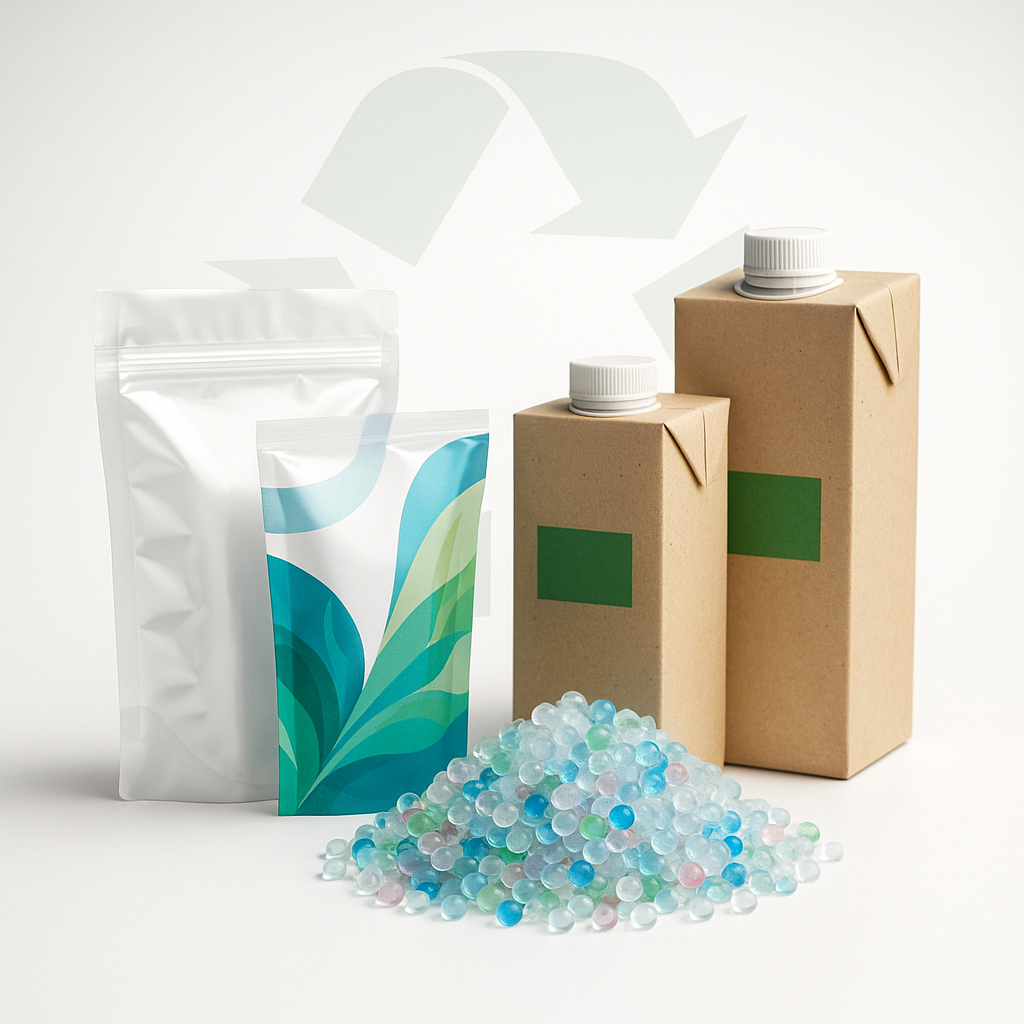
The plastic revolution – turning waste into bioplastics
Listened to & summarised from the SWR podcast ‘Das Wissen – Die Plastikwende: How can plastic become sustainable?’ with chemist Dr Manuel Häußler (Max Planck Institute/CTC, founder of EvoLoop). 1 | Why we need to rethink plastic Plastic is light, robust and extremely cheap – which is precisely why it is conquering every market segment.…
-
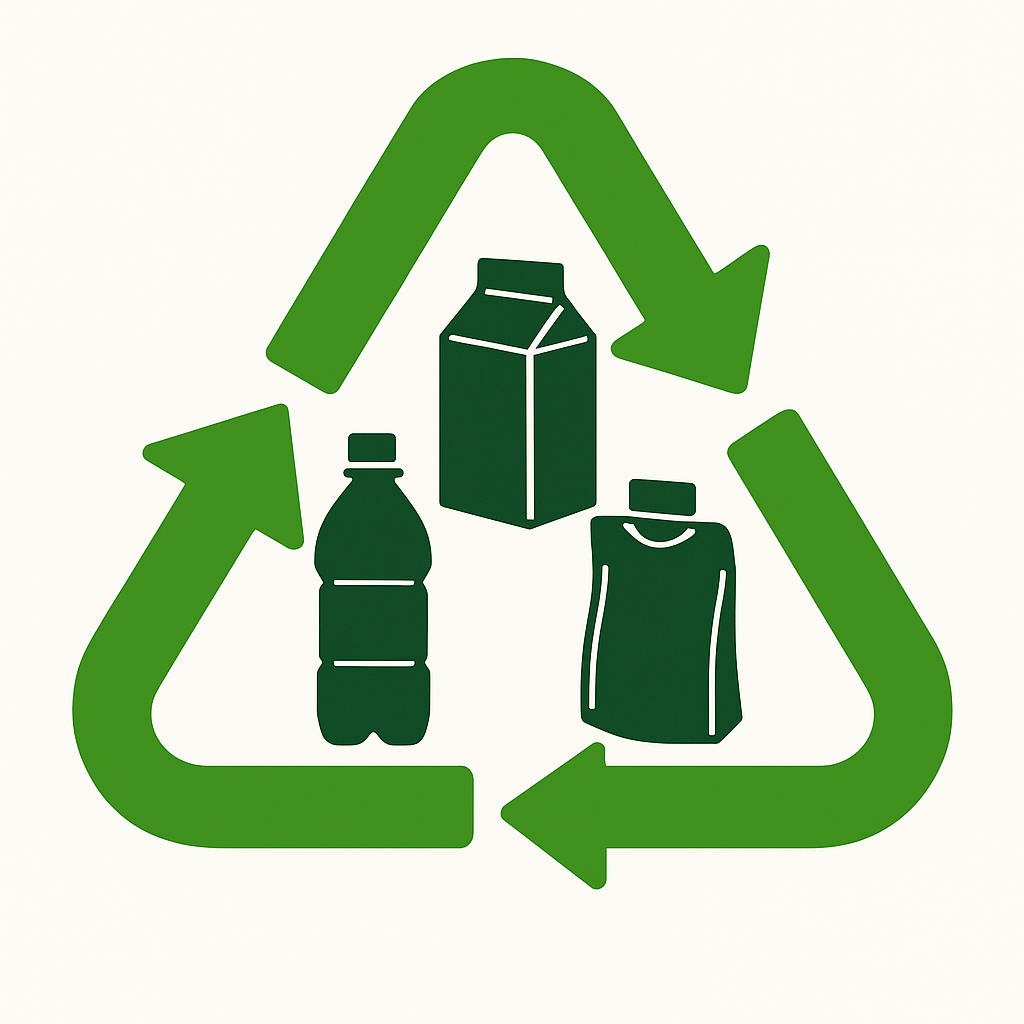
PET bottle, beverage carton or pouch – which is the ultimate recycling champion in the EU?
An attempt to compare costs and recyclability Packaging for water and other beverages is increasingly at the centre of the sustainability debate. This not only raises the question of production costs, but also recyclability and practical implementation in various EU countries. In this specialist article, we compare PET bottles, beverage cartons and pouches in terms…
-
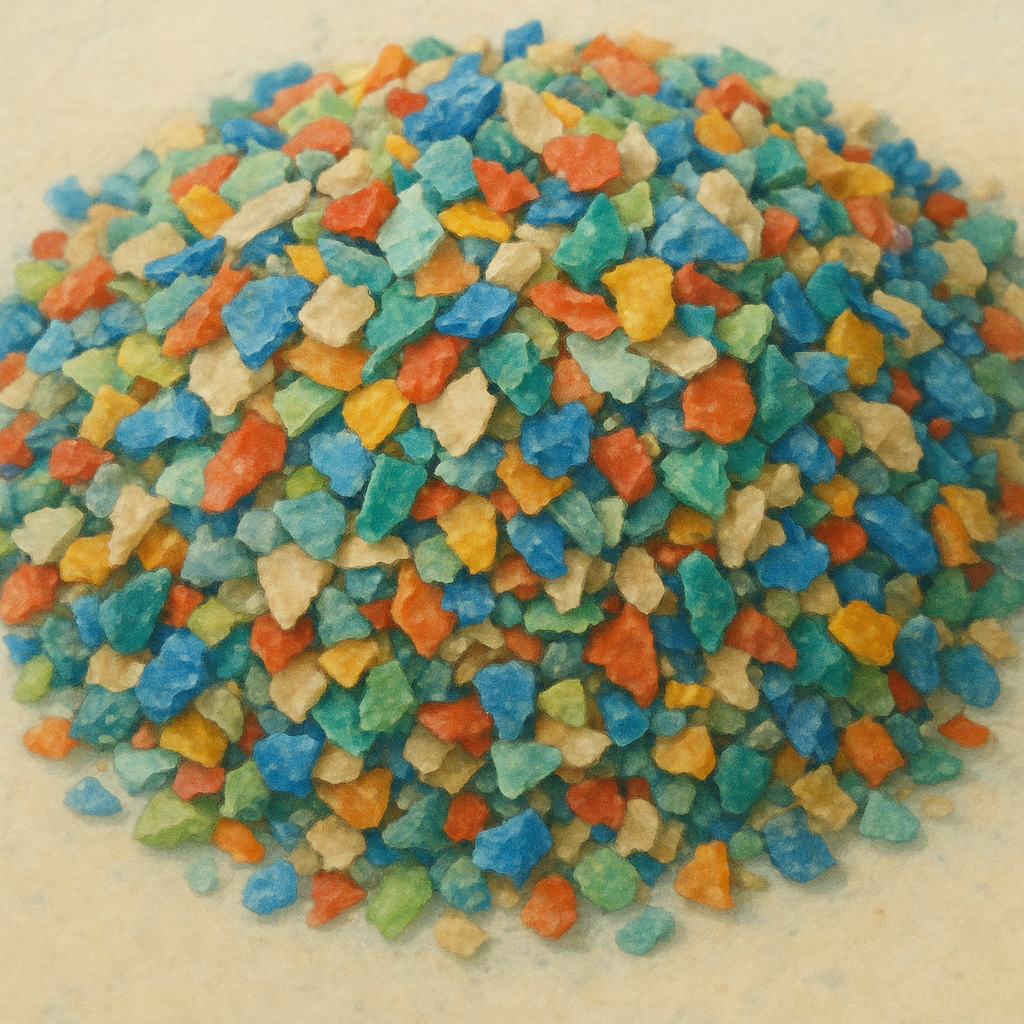
New study highlights challenges and potential in recycling flexible plastics
In a recent study, CEFLEX and Ghent University investigated the challenges and potential of new recycling technologies for flexible plastics. These technologies include delamination, deinking, dissolution and contaminant extraction and aim to meet the requirements of the Packaging and Packaging Waste Directive by 2030. Technology selection and capacity assessment The study analysed twelve technology providers…
-
35th Inno-Talk Europe – Focus on secondary packaging
Use of film packaging with recycled material – What happens next? Use of film packaging with recycled material – What’s next? Highlights of the presentations Presentation by Cihat Langguth:Cihat Langguth from Der Grüne Punkt talked about the role of waste collection and sorting in the production of PCR materials. He emphasised: Presentation by Mika Sang:Mika…
-

Flexpack minimum packaging: sustainability meets innovation
Report on the 22nd Inno-Meeting on February 12 and 13, 2025 in OsnabrückFlexpack minimal packaging – trends and technologies 2025 According to the motto “Less is more”, the 22nd Inno-Meeting presented future-oriented and sustainable approaches in the development of flexible minimal packaging. From 12 to 13 February 2025 in Osnabrück, the symposium showed how innovative…
-
Regulation (EU) 2025/40 (PPWR ): PFAS are regulated more strictly
Regulation (EU) 2025/40 on packaging and packaging waste, published on 22 January 2025, contains important regulations on limiting perfluorinated and polyfluorinated alkyl substances (PFAS) in food packaging. From 12 August 2026, food packaging may no longer be placed on the market if it contains PFAS in the following concentrations: These regulations are particularly relevant for…
-
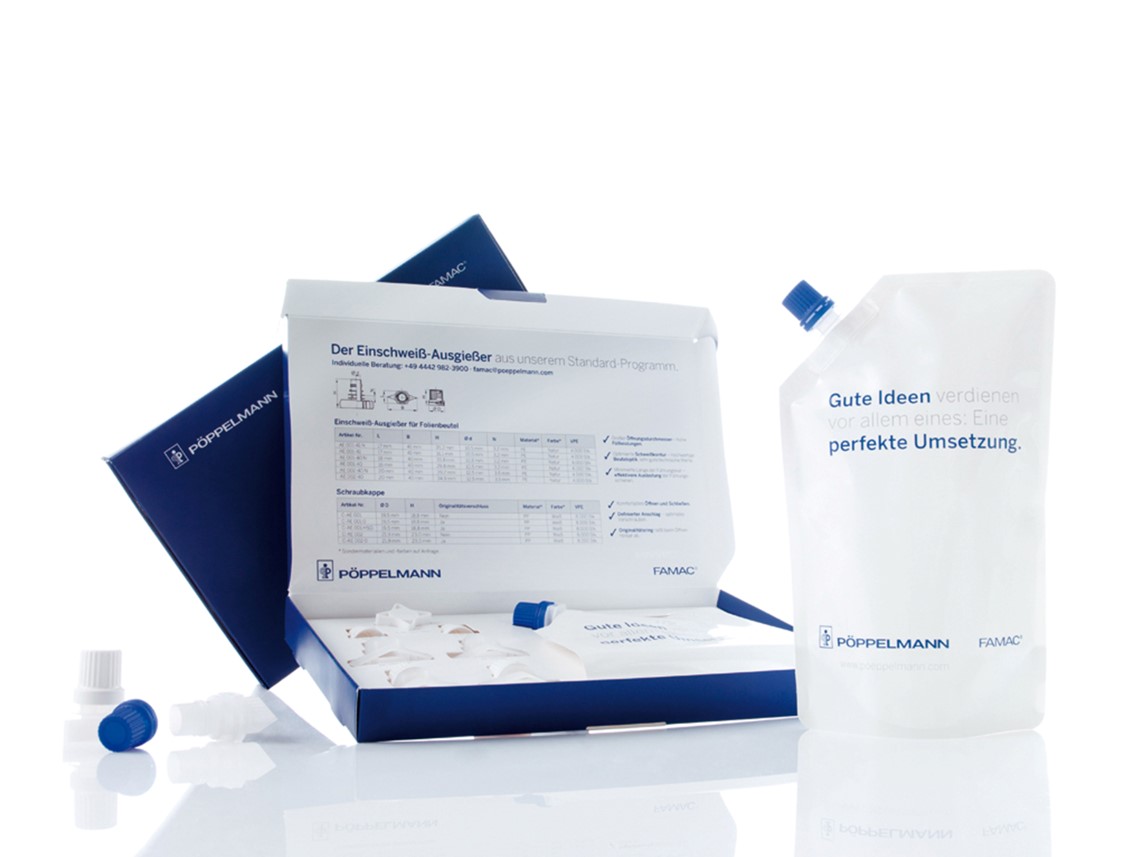
Sustainability and technology combined – Pöppelmann spouts for stand-up pouches
Flexible packaging is used in many areas and stand-up pouches in particular are increasinglyreplacing existing packaging for pet and baby food, detergents and cleaning agents, personal careand dairy products. They are easy to handle, light in weight and reduce the volume of waste. Thismakes them an extremely sustainable packaging solution. Our spouts are an essential…
-
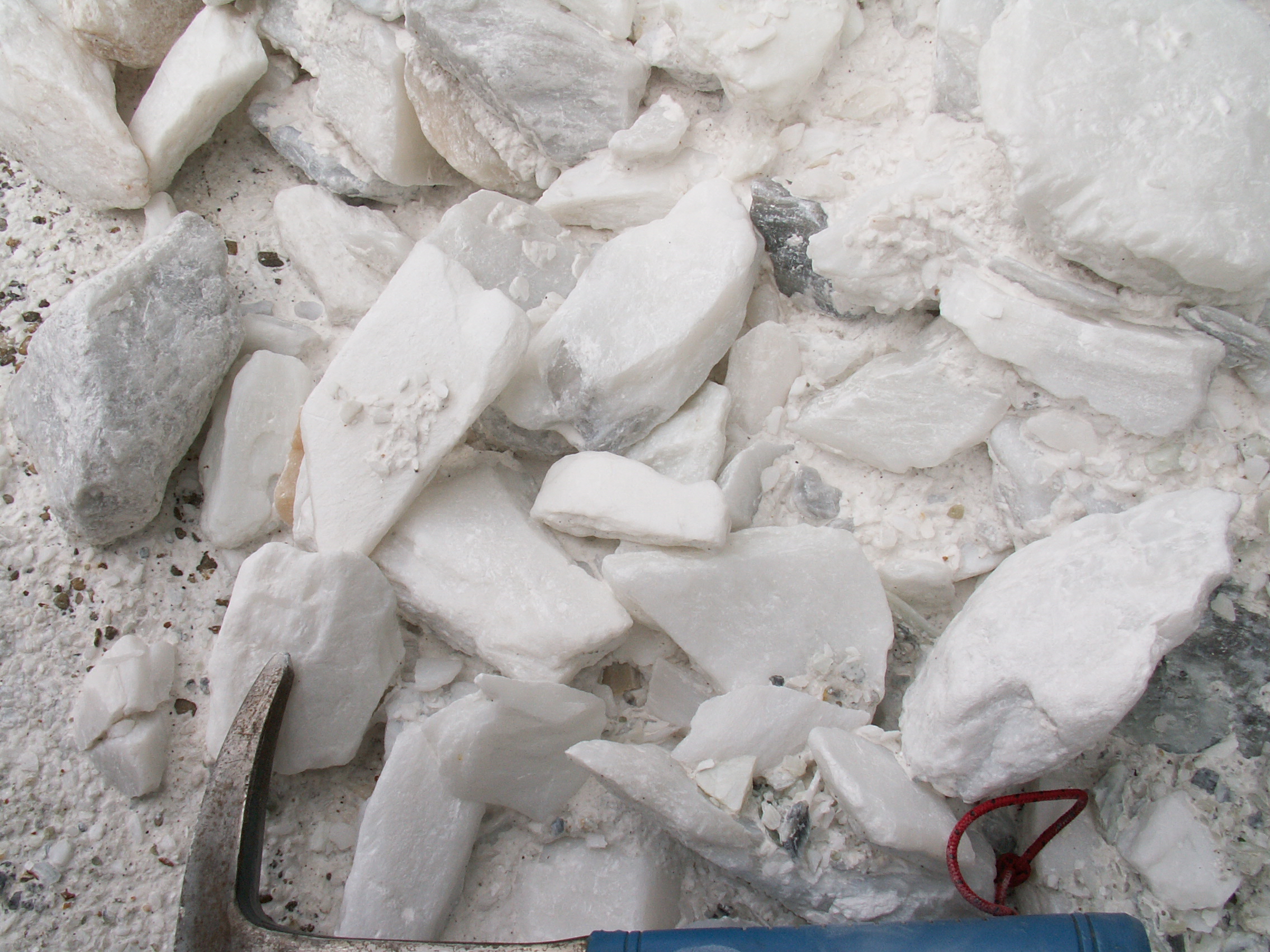
Talc (talcum powder) classified as carcinogenic – what does this mean for packaging?
Once again there is an excitement about an additive in the film and paper industry. We have taken a look at it and compiled some facts. It is not only an additive for flexpack, but also for food, cosmetics and pharmaceuticals. Is it therefore not so important for films and paper? Talc or talcum can…
-
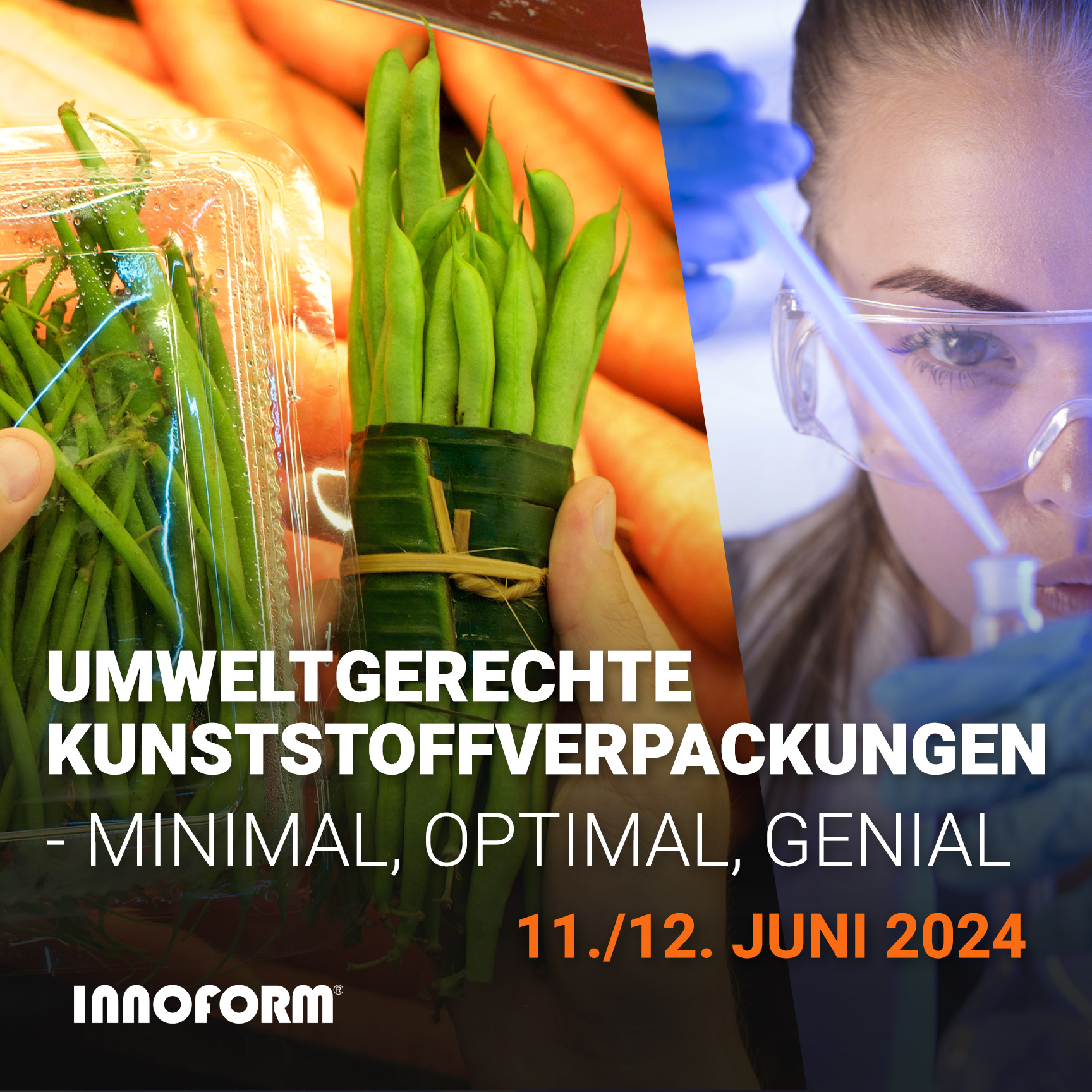
Review of the symposium “Environmentally friendly plastic packaging
offered numerous minimal, optimal and ingenious solutions On 11 and 12 June 2024, the symposium at the SKZ-Modellfabrik Würzburg highlighted five key aspects of environmentally friendly plastic packaging. New, practical solutions for sustainable packaging developments were presented in all areas Dieter Finna The event brought together experts from industry, research and brand owners for the…
-
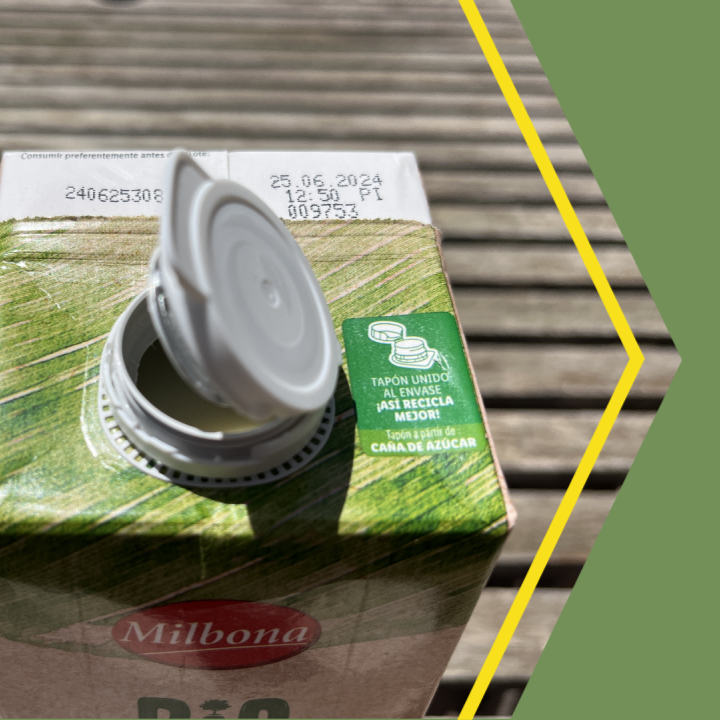
Initially unpopular EU directives promote innovation.
Hallo, I am the new Easy Opening cap – your hero on the beverage carton! The EU did not think of that when they told me to live on the packaging. Stay by my side, I will show you the world of beverages anew! Hey, it is me, the brand new cap that never comes…