
Switching a stand-up pouch to a mono-material structure changes far more than the film construction. The barrier and adhesive must work together, the spout needs a reliable seal, and the machine needs a robust process window. At the same time, packaging data requirements are increasing, while shorter runs and price pressure are changing the economics. These interfaces determine whether a material concept can become packaging that can be produced reliably.
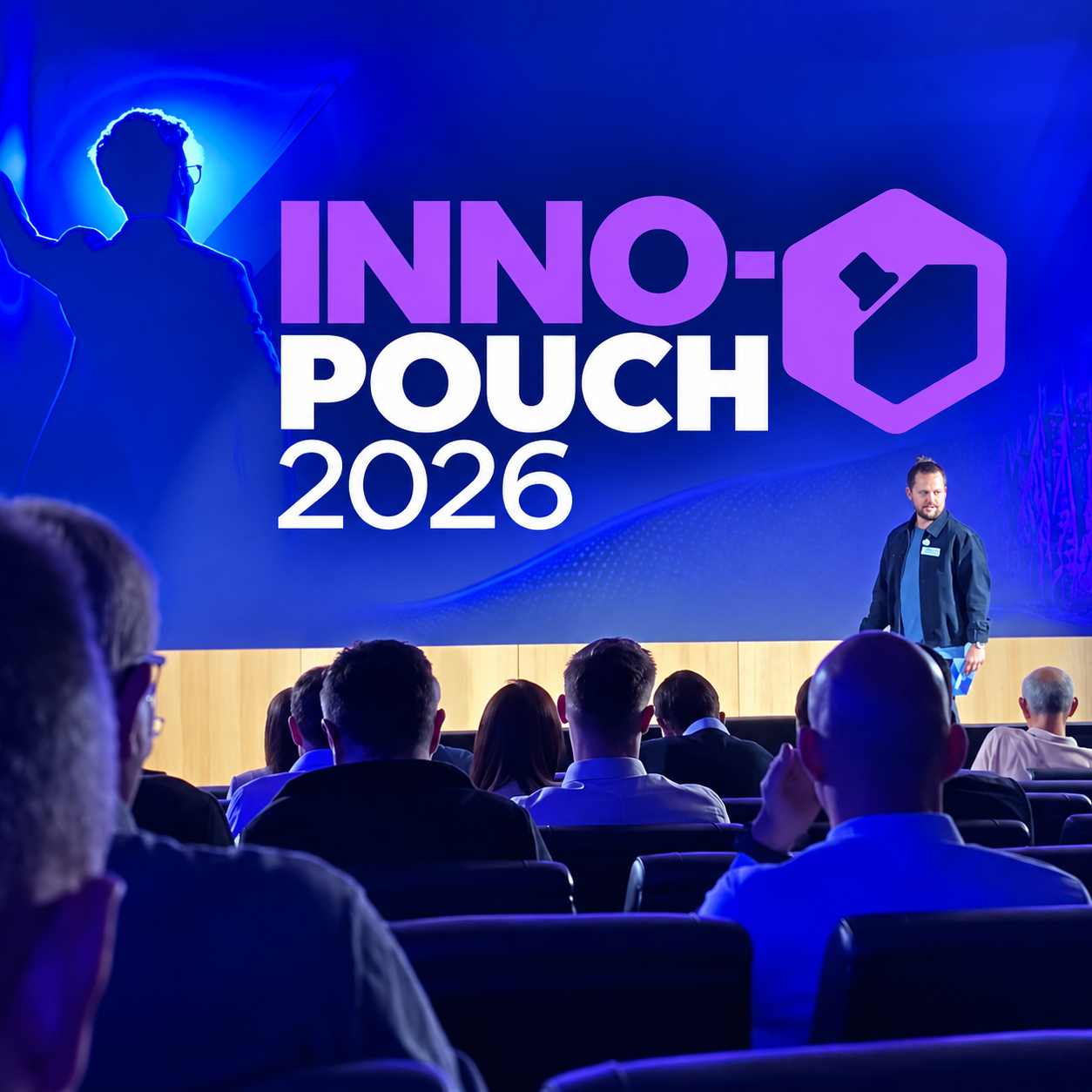
At our INNO-POUCH conference on 8 and 9 October 2026, held at the premises of our host and sponsor HP in Barcelona, these challenges came together under the theme “Smart Pouches – Digital, Compliant, Tight”. The 16 expert speakers painted a picture of an industry in which technical development, regulation and business models are closely connected. For converters, brand owners and their suppliers, this means that a transition can rarely be managed within a single department.
Getting the economics right starts with the packaging decision
For many years, the packaging industry could count on growing volumes. Yael Barak of HP described a market in which that momentum is fading. Shorter runs, fluctuating orders and price pressure demand greater flexibility. Digital printing is becoming a commercially viable option as the order mix changes.
A practical example presented by HP illustrates the point: 230,000 metres and 180 SKUs were produced on a digital press. According to the presentation, setup waste was below one per cent, compared with five to eight per cent in analogue printing. Alongside printing output, converters therefore need to consider how much material and time are lost before an order yields saleable product.
Before any investment, however, comes the question of which packaging makes sense for the product. Christoph Waldau, CEO of BPC, presented an assessment using 36 indicators across the value chain. In a survey of 25 brand owners, performance accounted for 37 per cent of the weighting, cost for 36 per cent and environmental factors for 27 per cent. The stand-up pouch did not rank last overall in any of the applications assessed. Its limitations in barrier performance, stiffness, dispensing and mechanical strength nevertheless remain part of the decision.
The route onto the purchasing shortlist is changing too. An analysis presented by info.link on pouch-related purchasing queries found that just 1.3 per cent of AI source citations referred to the 18 organisations examined, representing 17 speakers plus Innoform. This is a wake-up call for the entire industry: expertise needs to be easy to find and clearly presented. Good, structured content can influence the shortlist before a sales team even hears about a project.
Compliance needs reliable data across the supply chain
The PPWR featured in twelve of the 16 presentations. It connects recyclability, material use and documentation with packaging development. EPR fees, which depend on weight and recyclability, also feed into the economic assessment. Material choices therefore have further implications for costs and supporting documentation.
In many companies, the starting point is far from straightforward. Surveys from twelve Interzero webinars show that packaging data is often scattered and incomplete. Suppliers’ PFAS declarations are frequently missing. Anyone having to piece together information from Excel, emails and ERP systems first faces an organisational task: what data is missing, who provides it, and how can it be exchanged reliably?
Digital tools can reveal these gaps. Software cannot, however, make incorrect source data more reliable. Alexandre Zuber of Interzero accordingly positioned AI as an accelerator whose outputs require expert assessment. Common data standards and interoperable systems would make exchange easier and reduce the effort involved in using different customer templates.
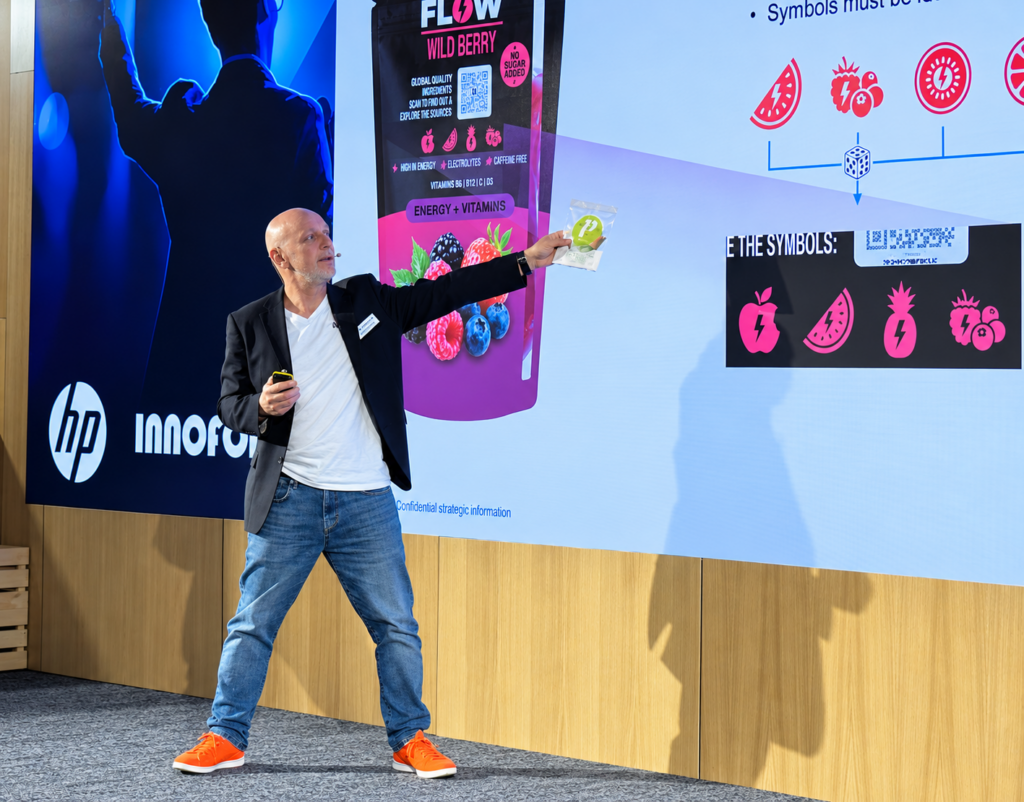
The DPP Compass presented by epeaswitzerland combines guidance through the regulatory landscape with independent third-party verification and benchmarking. KURZ SCRIBOS showed how packaging data can be accessed via the product: serialised, copy-protected QR codes can be scanned without an app. Variable symbols enable an additional check, while scans provide insights into usage and counterfeiting hotspots. The solution is prepared for the Digital Product Passport and the PPWR’s information requirements. Reliable underlying data remains essential.
Mono-material structures must prove themselves in the finished pouch
Replacing PET or aluminium with PE or PP does not resolve the entire development challenge. This was particularly clear in high-barrier and retort applications. TOPPAN and Irplast described mono-material packaging as a coordinated system in which the barrier must still perform after thermal stress. Collaboration across the value chain is therefore part of the technical implementation.
A mono-PP soup pouch from Australia showed that this work can translate into a commercial application. According to the presentation, it delivers an 18-month shelf life without reducing line speed. Huhtamaki also identified outstanding challenges for the next generation of PP retort pouches: flex cracking of the barrier, sensory effects, visual defects and drop resistance. Demonstrating feasibility therefore does not replace testing for the specific product.
Even seemingly minor components deserve attention. MORCHEM presented a solvent-free laminating adhesive system that achieved a bond strength of more than 4 N/15 mm after retorting with wet pet food at 121 °C for 30 minutes. According to the results presented, this remained stable over six months of storage. This broadens the options for demanding applications in which adhesive, film and contents must perform together.
Philippe Van Damme of LYB illustrated the relationship between material use and cost with a high-barrier pouch. A thinner mono-PE structure at 94 g/m² was compared with PET/metPET/PE at 103 g/m². The internal calculation showed a two per cent reduction in cost, a ten per cent reduction in the EPR fee and an eight per cent reduction in the carbon footprint. Such case studies offer useful pointers for development; their results depend on the specific construction.
Paper stand-up pouches make it particularly clear why testing the finished pack matters. Across 69 trials by one.five, barrier performance at the side fold was 1.7 to 5.7 times worse than in the flat material. Liquid contents caused more damage than tablets in all three materials tested. This gives brand owners a concrete task: define acceptable defects before the trial and involve the machine manufacturer early.
A narrow sealing window demands precise processes
The material transition affects every contact point on the machine. Recyclable films can be less stiff, more elastic and more prone to static charging. Ellen Reichmann of Hesser Packaging described a sealing process window of around ±10 °C and reported that more than 50 machine modules had already been optimised for mono-material packaging. Production ramp-up therefore requires joint trials involving film manufacturers, brand owners and machine builders.
Heat management becomes particularly critical when sealing in spouts. Thomas Fuest of Menshen contrasted the large gap between the melting points of conventional laminate layers with the much smaller gap in mono-material films. Cold spout ribs can cut through the laminate. Preheating, separate sealing jaws for the spout and shoulders, and a ribless spout base were among the solutions presented.
Other approaches focus directly on energy input. Herrmann Ultraschall generates heat specifically in the sealing zone, reducing shrinkage in mono-material films. watttron controls temperature through individual heating pixels. According to the company, this can save up to 50 per cent of energy during operation. Energy consumption data from the pixels is also used by AI to detect anomalies such as wrinkles or product residue in the seal.
Precision must also hold up when jobs change. Karlville reported format changeovers of five to 30 minutes using recipe-based digital setup, compared with 45 to 90 minutes previously. This brings the discussion back to the economics of shorter runs: material, process control and setup effort jointly determine how flexibly a production operation can respond.

The closing tour of the Digital Pouch Factory gave participants the opportunity to see pouch production and the digital printing technology presented in action. It rounded off a day and a half of intensive knowledge sharing, networking and new approaches to packaging innovation.
Further progress in stand-up pouch development depends on tackling these challenges together. The solutions presented ranged from commercial mono-material applications to data-based sealing control. The next step is to align them with specific products and production conditions. Where is the biggest hurdle on your path to a recyclable pouch today: the material, the machine or the data?
